
Entertainment
Were beer cans disguised as soft drinks, or soda smuggled into Qatar at the World cup? This claim is False!






Breaking News
Did Cardi B Confirm Dating Nigerian Goalkeeper Maduka Okoye? The $300,000 Monthly Rumour Debunked
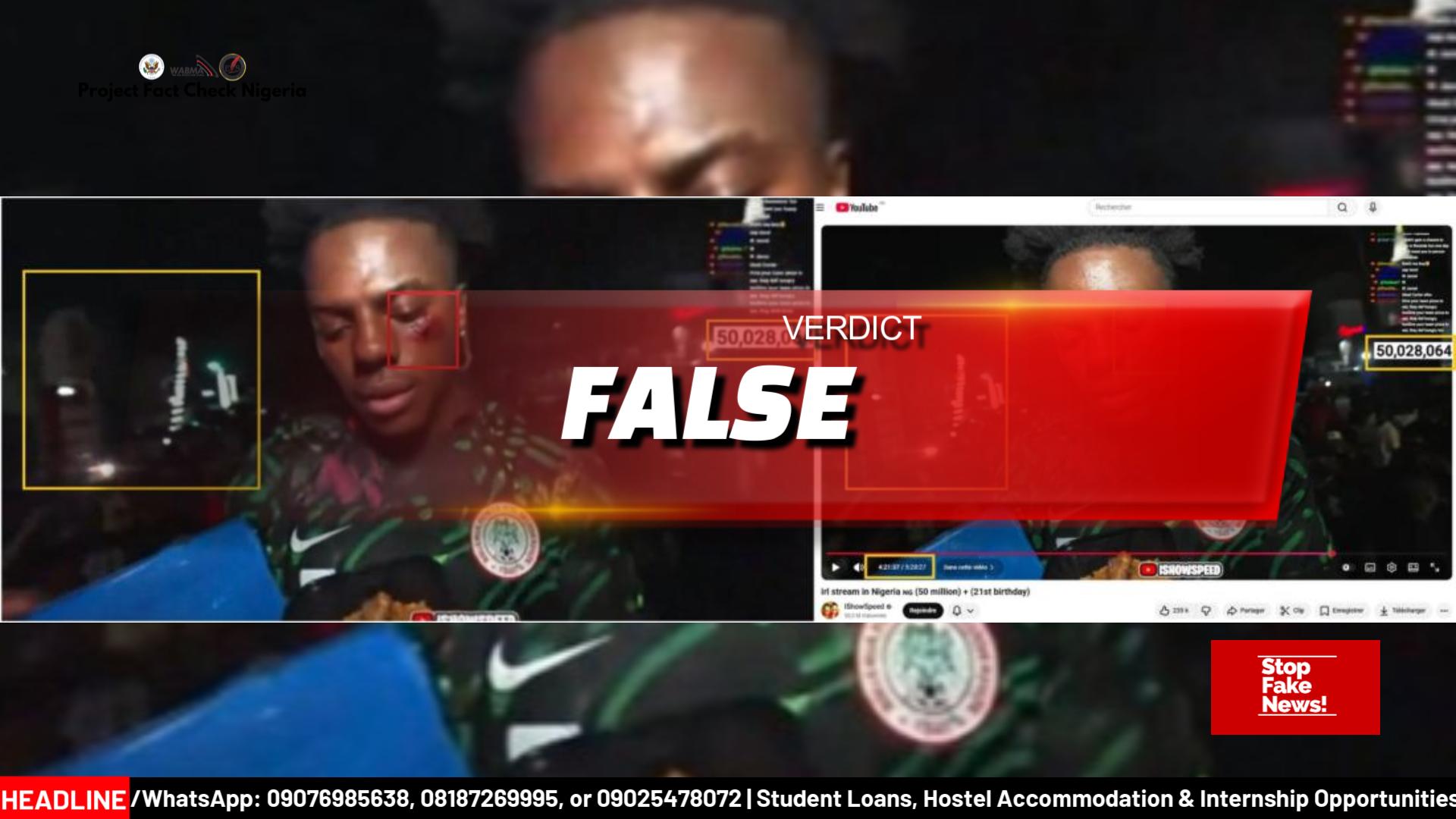
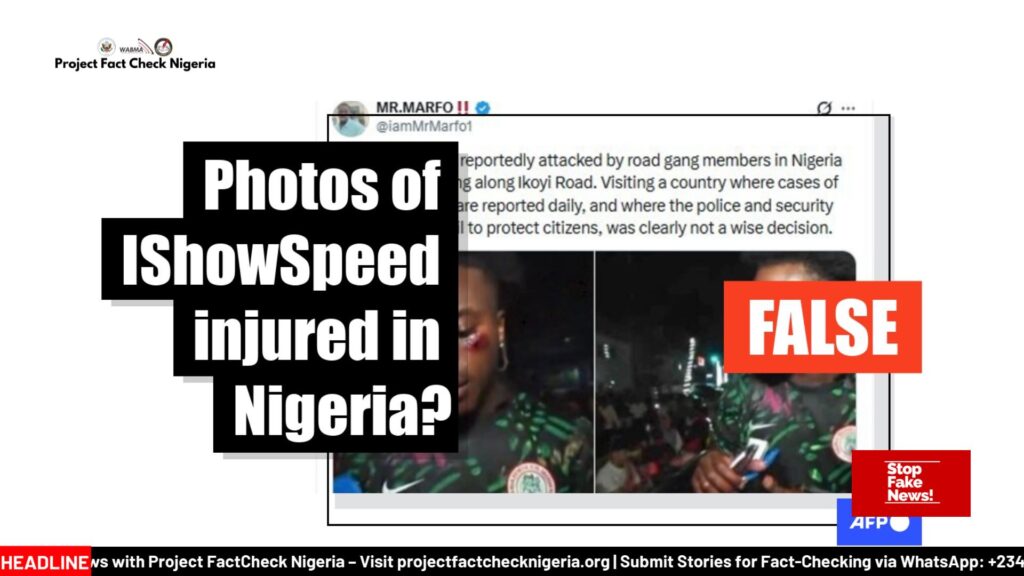
A troubling image circulating online shows American YouTube star IShowSpeed wearing a Nigerian jersey. His face appears bruised. The caption is alarming. It claims he was attacked by road gang members in Nigeria while livestreaming along Ikoyi Road, Lagos.
It suggests that visiting Nigeria was unsafe. It paints a picture of chaos.
The post originates from an X account, @iamMrMarfo1. From there, it spreads.
But what really happened?
First, let’s examine the context.
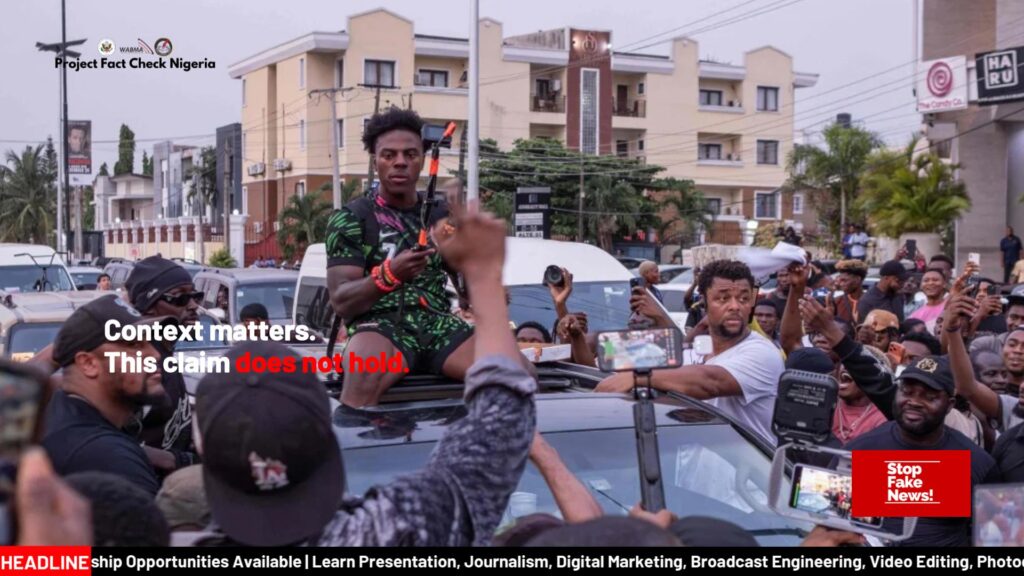
IShowSpeed, whose real name is Darren Jason Watkins Jr., was recently in Lagos. He celebrated his 21st birthday. He surpassed 50 million YouTube subscribers. On December 29, 2025, he launched a 20 country African tour in 28 days. On January 21, he livestreamed from Balogun Market in Lagos Island. Crowds gathered. Security escorted him. The scene was intense but public.
Soon after, posts claimed he had been attacked.
The circulating images appeared to show facial injuries.
WHAT WE CHECKED
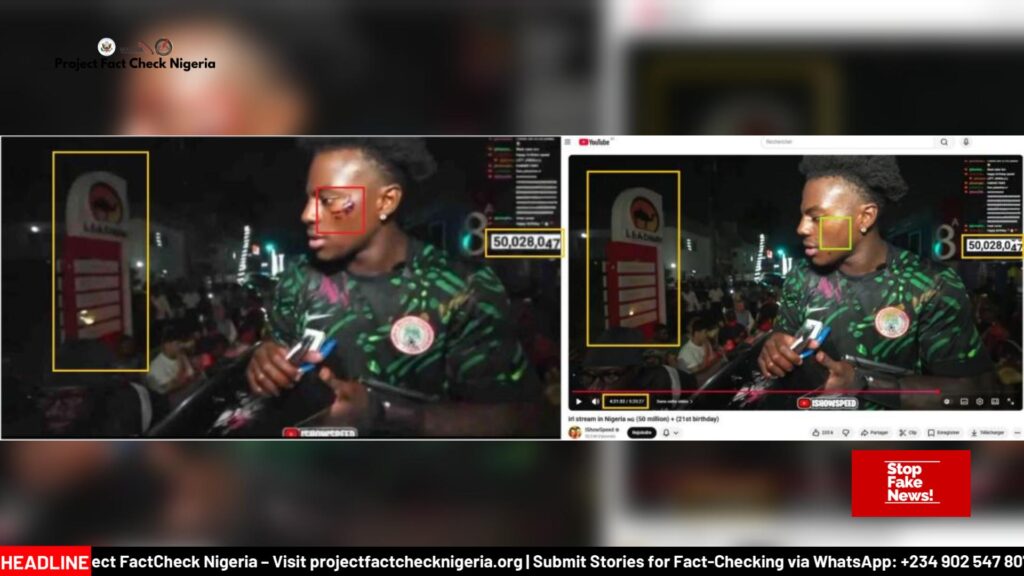
We examined the footage. According to reporting by Agence France Presse, the images were doctored. AFP traced the visuals back to specific timestamps in the original livestream. Moments at approximately 4:21:32 and 4:21:36 were manipulated to create the bruised effect.
AFP journalists who were physically present in Lagos during his visit reported that they did not witness any attack. They also heard nothing to suggest that an assault occurred. The altered images did not only appear in English. They spread in French, Arabic, Spanish, Hausa, and Zulu.
WHAT WE FOUND
It is important to note that IShowSpeed has faced disruptions during other international visits.
In Algeria, he was struck by thrown water bottles during a football match. In Norway in 2024, he experienced an incident outside a shop.
But those are separate events.
There is no credible evidence that he was attacked in Nigeria. No verified report. No confirmed injury. No authenticated footage. The viral image was manipulated.
Verdict: False.
When dramatic images circulate, especially those that inflame fear or damage reputations, verify before sharing.
Screenshots can be altered.
Livestreams can be edited.
Context matters.
This claim does not hold.

Did Cardi B Confirm Dating Nigerian Goalkeeper Maduka Okoye? The $300,000 Monthly Rumour Debunked

Did Cardi B Confirm Dating Nigerian Goalkeeper Maduka Okoye? The $300,000 Monthly Rumour Debunked


