
Breaking News
Analyzing the Phantom Coup in Cameroon?


It came fast. It came loud. And it came dressed as breaking news.

“Military coup in Cameroon! Paul Biya removed from power after 41 years!”
The video, shared on TikTok by a user named Jimmoexpress37, opened with dramatic music and flashing red text:
“BREAKING: JUBILATION ACROSS CAMEROON”
“MILITARY TAKES OVER POWER”
“PAUL BIYA NO WHERE TO BE FOUND”

It claimed the coup happened around 5 a.m. The narrator spoke with urgency, describing a bloodless takeover triggered by public frustration over Biya’s long rule.
Soon after, the same video was clipped, shortened to 5 minutes, and pushed across WhatsApp groups in Nigeria, Ghana, and Francophone Africa. The mood? Celebration. Many believed a new chapter had opened in Cameroon.
But something didn’t add up.
There was no mention of the supposed coup on BBC, Al Jazeera, or Reuters—not even on Cameroon’s national broadcaster. For a coup in one of Central Africa’s most tightly controlled countries, this silence was deafening.
So fact checkers started digging.
The earliest version of the video traced back to June 8, 2025, posted by a little-known YouTube channel called Jeunesse Panafricaine, with just 2,700 subscribers. The video seemed real—until you listened carefully.
The narrator’s voice didn’t quite match the visuals. Experts pointed out it carried signs of AI manipulation—that slightly off rhythm, that synthetic clarity that’s too perfect for amateur recording.

Then came the smoking gun: President Paul Biya’s verified Facebook account was still active. Just hours after the video’s circulation, Biya posted a message urging unity:
“Let us not oppose our differences but confront our ideas… Let’s consider our ethnic or cultural differences as enriching factors.”
He was clearly alive, well, and still president!
More checks showed there was no troop movement in Yaoundé, no military declaration, no international diplomatic response—nothing you would expect if a 41-year ruler had been overthrown.
And history supports that. The last coup attempt in Cameroon was in 1984—and it failed. Biya, now in his 90s, has survived more than four decades of political storms. But there has been no successful or confirmed coup attempt since then.
So, what was the video?
Likely, it was AI-enhanced disinformation, the kind used to test reactions, spark unrest, or push particular narratives. With AI, it’s now easier than ever to create the illusion of news without ever stepping into a newsroom.

And that’s the real danger.
False stories about coups can destabilize countries, trigger panic, or even justify preemptive crackdowns. In fragile political climates, lies about power changes can be as damaging as the real thing.
Conclusion: Paul Biya was not overthrown. There was no military coup.
What there was—was a very real attempt to manipulate perception.
Across Africa and beyond, videos, reels, and tweets are shaping opinions, not always with truth.
From fake bans to fictional buildings, from manufactured coups to fabricated scandals—misinformation thrives when facts are not checked.
At WABMA Debunker, we don’t take posts at face value. We follow the facts. And we don’t just question what’s said—we question who benefits when it’s believed.
#fakenews #fakenews #debunkit #debunkit #fakenews





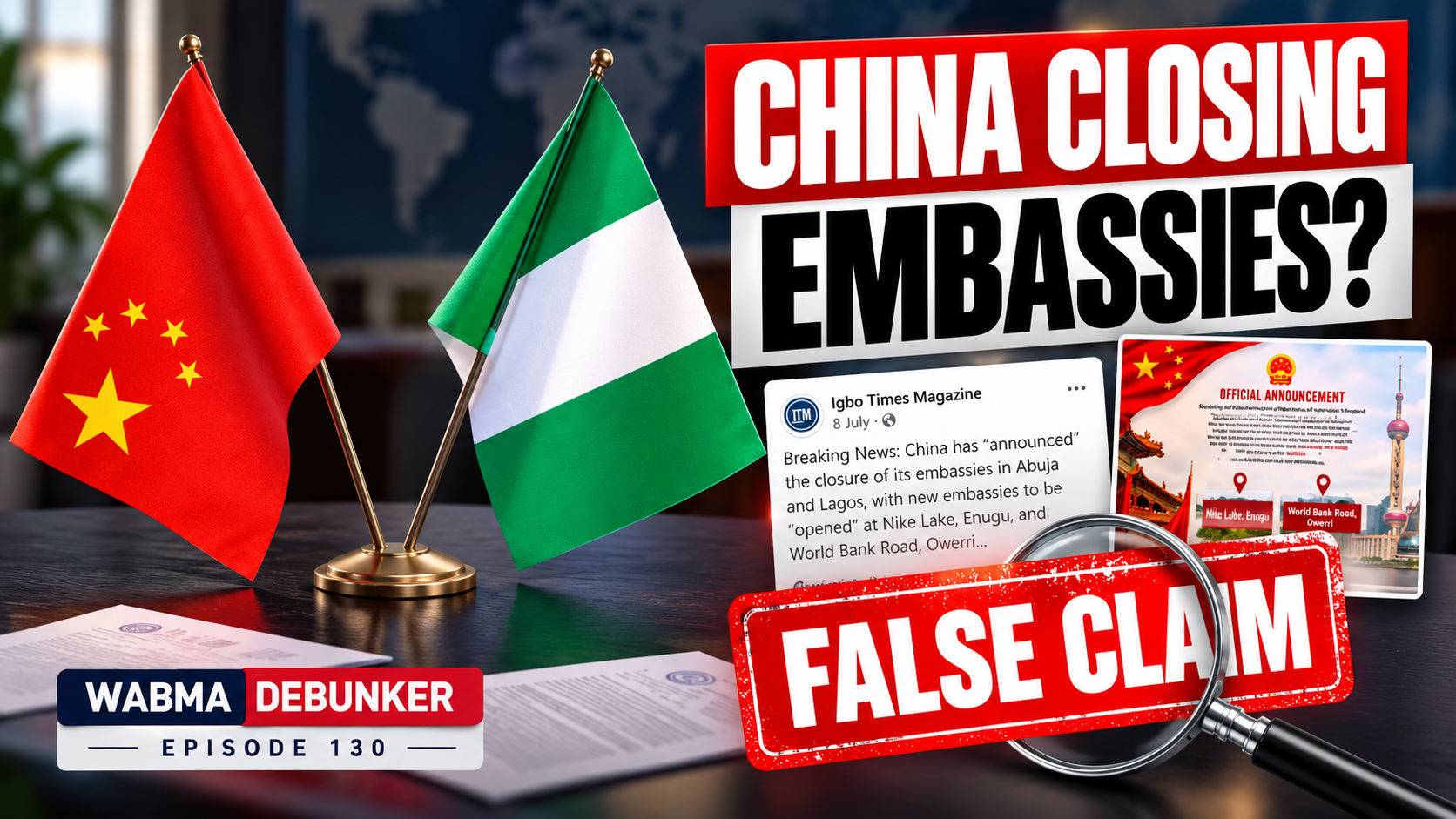
A viral social media report claims that China plans to close its diplomatic missions in Abuja and Lagos and relocate them to Nike Lake in Enugu and World Bank Road in Owerri. The report further claims that the alleged move is because Igbo people travel to China more frequently than other Nigerians.
But is this claim true?
🔎 WABMA DEBUNKER INVESTIGATES.
In this episode, we examine the viral claim against official Chinese diplomatic records and other credible sources.
Our investigation found no credible evidence that China has announced the closure of its Embassy in Abuja or its Consulate General in Lagos. We also found no verified announcement establishing new Chinese embassies in Enugu or Owerri, or supporting the alleged ethnic explanation for the supposed relocation.
✅ VERDICT: FALSE
The viral claim is unsupported by the official records examined in this investigation. China’s diplomatic missions in Abuja and Lagos remain listed in official Chinese records.
📌 WHY THIS MATTERS
False claims about embassies, visas and international relations can cause unnecessary concern and encourage misinformation. Always check official embassy communications and foreign ministry announcements before sharing sensational reports.
📢 HAVE A CLAIM YOU WANT US TO FACT-CHECK?
Breaking News
Did Cardi B Confirm Dating Nigerian Goalkeeper Maduka Okoye? The $300,000 Monthly Rumour Debunked
African News
✴️ Ep.116– Does Viral Video Show a Market Between Congo and Gabon Where Parents Sell Their Children?

A viral video claims to show a “child market” between Congo and Gabon where parents allegedly sell their children. But is this true?

In this episode of WABMA Fake News Debunker (Ep. 116), we carefully examine the footage, verify available evidence, and separate fact from fiction.
🔍 What we investigated:
- The viral video and its visual details
- Reports from credible international media
- Data from global child-protection organizations
- Any evidence of a “child market” in the Congo–Gabon region
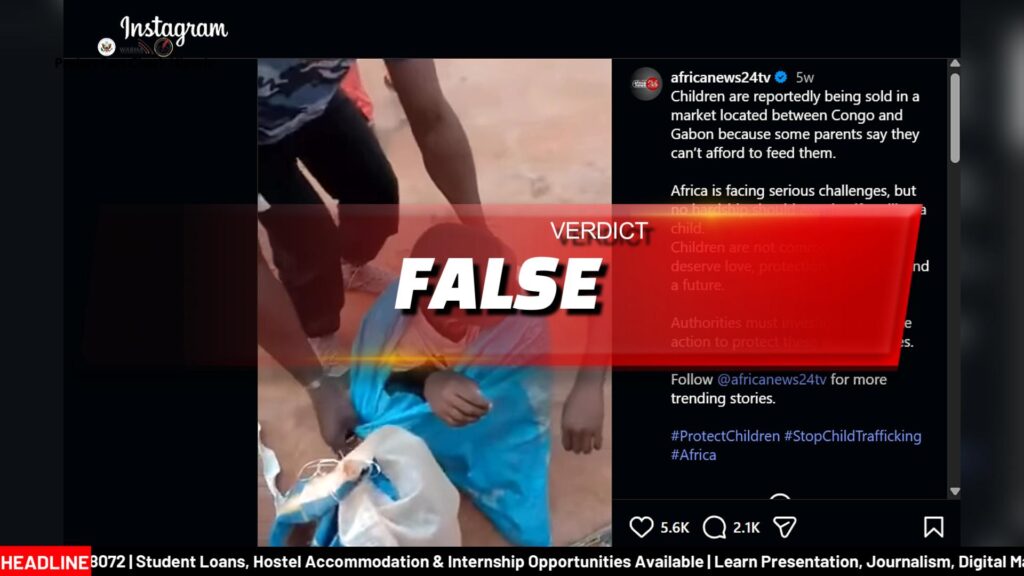
❌ Our Verdict: FALSE
There is no verified evidence that such a market exists. The viral video does not prove child trafficking and has been shared without proper context.
⚠️ Why this matters:
Misinformation like this spreads fear, reinforces harmful stereotypes, and distracts from real child protection issues.
🎓 Learn Media & Fact-Checking Skills with WABMA
Become a skilled media professional in just 5 weeks.
📞 +2349025478072
📞 +2349076985638
📞 +2348187269995
🌐 wabma.org
CLAIM: Did China Announce the Closure of Its Diplomatic Missions in Abuja and Lagos?