
African News
Did Igbos Recently Attack the Nigerian Embassy in Senegal?


A video appeared on X, claiming to show a shocking scene—an attack on the Nigerian embassy in Dakar, Senegal, allegedly carried out by Igbos. The footage, branded with a dramatic watermark reading, “Wild crowd of Ibo Biafrans attacked Nigerian embassy in Dakar Senegal, beat officials, loot, vandalised properties, and torn the Nigerian flag,” was quickly shared far and wide. It stirred emotions, especially when Ridwan Ajetunmobi, a Senior Special Assistant on Media to the Lagos State Governor, reposted it with the caption: “It’s a regular trademark.”

The video gained momentum fast—thousands of views, hundreds of likes, and reposts all spreading the story. Another X user, @NoNonsensezone, fanned the flames with a similar caption: “Trending Video: A video circulating on social media shows men from the Igbo tribe of Nigeria attacking an Embassy in Dakar, Senegal. Looting, vandalising—this madness!”
But something about the video felt off.
Fact-checkers dug deep, running a reverse image search on the video’s keyframes. What they discovered was startling: the video didn’t show a recent event at all. It was footage from March 2013, not 2024 as many had believed. The X posts were not just wrong—they were dangerously misleading.
Adding to this, there was no solid evidence that the people in the video were from the Igbo tribe, as the narrative suggested. The story being pushed was designed to inflame ethnic tensions in Nigeria, stirring up hostility with a false narrative. Worse still, there were no reports from credible sources about any unrest or riots involving Nigerians in Dakar, Senegal.
The conclusion?
The video that allegedly shows Igbos attacking the Nigerian embassy in Dakar, Senegal, is old—dating back to 2013—and completely misrepresented. The claim is false, and the video is being weaponized to incite tension between Igbos and other ethnic groups in Nigeria. Another case of misinformation with the power to divide.
========================



African News
Did U.S. Troops Arrive in Nigeria in February 2026? Here’s the Truth Behind the Viral Video
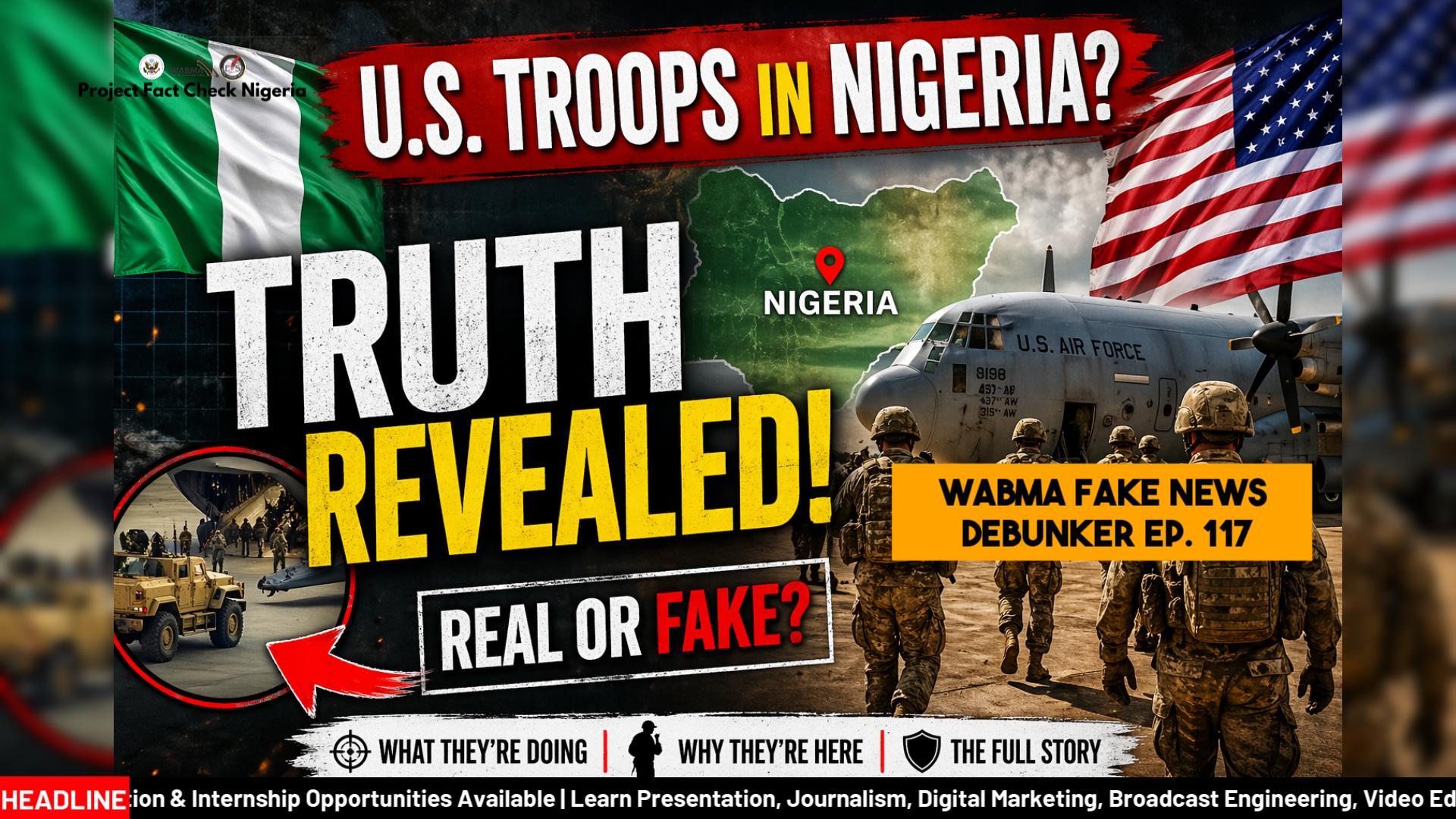
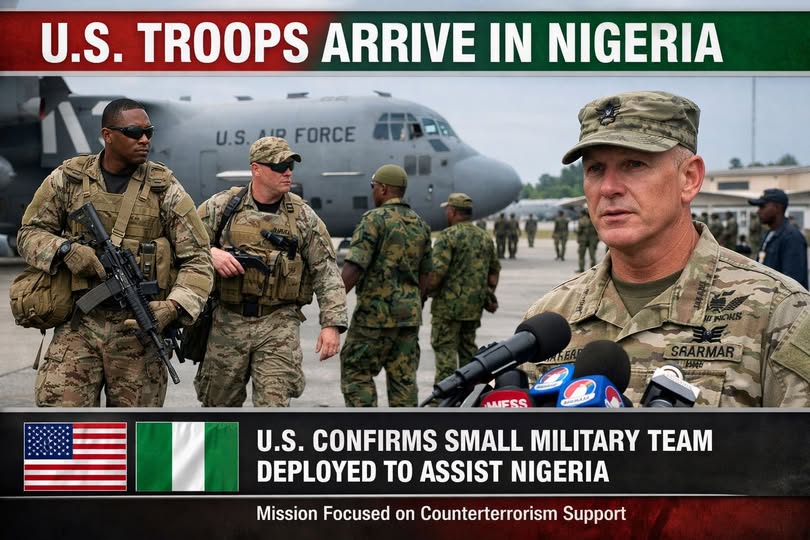
A viral video circulating across social media has sparked widespread concern, claiming that United States military forces arrived in Nigeria on February 15, 2026, suggesting a possible foreign intervention.
Given the sensitivity of national security and public anxiety surrounding such claims, we conducted a detailed verification to separate fact from speculation.
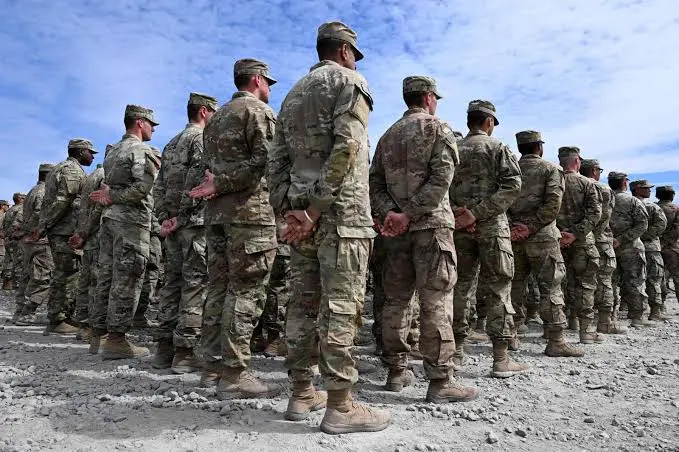
🔍 WHAT WE INVESTIGATED
To verify the claim, we examined:
- The viral video and its context
- Reports from reputable international media
- Official statements from Nigerian defence authorities
- Information from U.S. government and military sources
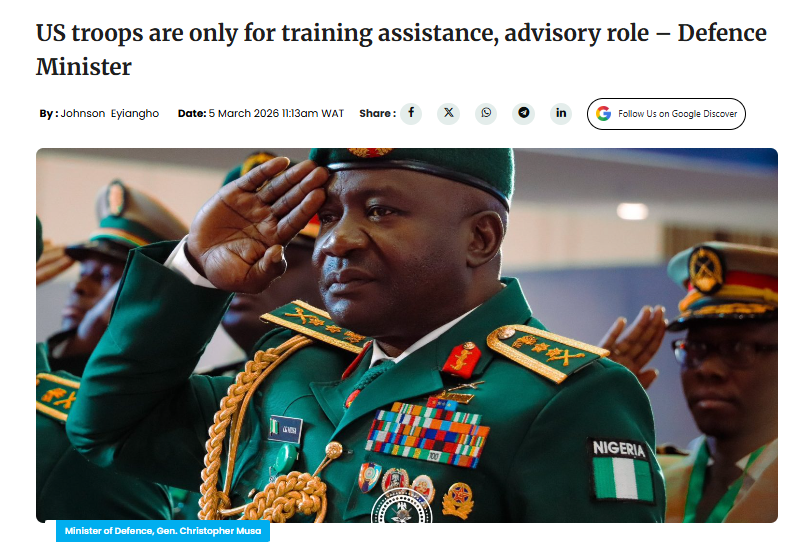
✅ WHAT THE EVIDENCE SHOWS
✔️ U.S. Military Personnel Did Arrive in Nigeria
Credible reports confirm that approximately 100 U.S. troops arrived in Nigeria around mid-February 2026.
This deployment is part of an ongoing security cooperation mission between Nigeria and the United States.
🎯 Purpose of the Mission
The presence of U.S. personnel is focused on supporting Nigeria’s fight against insurgent groups, including:
- Boko Haram
- Islamic State West Africa Province (ISWAP)
Their activities include:
- Training Nigerian military personnel
- Sharing intelligence
- Providing technical and operational support
- Strengthening counter-terrorism capacity
❌ WHAT IS MISLEADING OR FALSE
🚫 No Evidence of Independent Combat Operations
Despite claims online, there is no verified evidence that U.S. troops are conducting independent combat missions in Nigeria.
🚫 No Threat to Nigeria’s Sovereignty
Nigerian authorities have clarified that the deployment:
- Is part of an existing bilateral agreement
- Does not override Nigeria’s control over its military operations
- Falls within standard international security cooperation
🧠 CONTEXT YOU SHOULD KNOW
Nigeria has faced ongoing security challenges in parts of the North, with insurgent groups carrying out attacks on civilians and security forces.
As a result, international partnerships—including with the United States—have long played a role in:
- Military training
- Intelligence collaboration
- Logistical support
This latest deployment aligns with those ongoing efforts.
📊 SUMMARY
| Claim | Verdict |
|---|---|
| U.S. troops arrived in Nigeria | ✅ True |
| Troops are conducting combat operations | ❌ Not supported |
| Nigeria’s sovereignty is compromised | ❌ False |
🏁 FINAL VERDICT
Mostly True — But Misleading Without Context
While U.S. military personnel did arrive in Nigeria in February 2026, their role is strictly advisory and support-based, not a full-scale combat deployment as suggested by viral claims.
⚠️ WHY THIS MATTERS
Misinformation around military activity can quickly escalate fear and confusion.
Understanding the difference between:
- Military cooperation
- and military intervention
…is critical for informed public discourse.
🔔 STAY INFORMED
Follow our Fake News Debunker Series for verified, fact-checked updates on trending stories.
African News
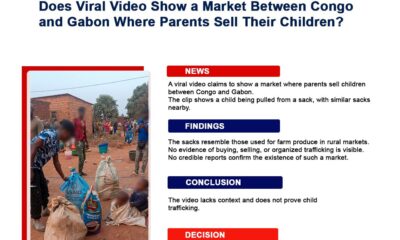
✴️ Ep.116– Does Viral Video Show a Market Between Congo and Gabon Where Parents Sell Their Children?

A viral video claims to show a “child market” between Congo and Gabon where parents allegedly sell their children. But is this true?

In this episode of WABMA Fake News Debunker (Ep. 116), we carefully examine the footage, verify available evidence, and separate fact from fiction.
🔍 What we investigated:
- The viral video and its visual details
- Reports from credible international media
- Data from global child-protection organizations
- Any evidence of a “child market” in the Congo–Gabon region
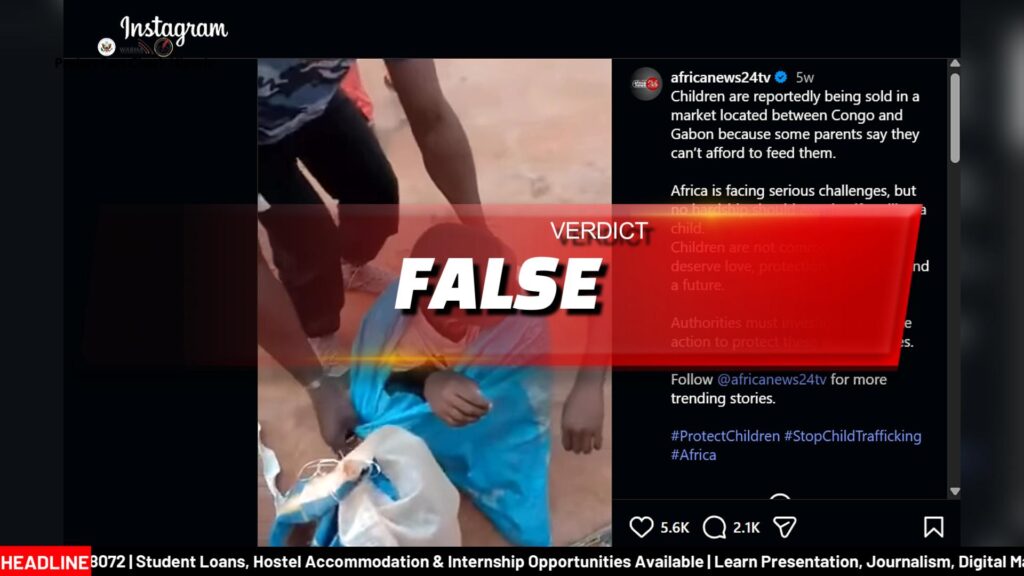
❌ Our Verdict: FALSE
There is no verified evidence that such a market exists. The viral video does not prove child trafficking and has been shared without proper context.
⚠️ Why this matters:
Misinformation like this spreads fear, reinforces harmful stereotypes, and distracts from real child protection issues.
🎓 Learn Media & Fact-Checking Skills with WABMA
Become a skilled media professional in just 5 weeks.
📞 +2349025478072
📞 +2349076985638
📞 +2348187269995
🌐 wabma.org

DID KANO GOVERNOR ABBA YUSUF DISTRIBUTE BRANDED UNDERWEAR TO WOMEN AS EMPOWERMENT ITEMS?
⚧️ Ep. 121–WABMA Fake News Debunker;


