Since the advent of the new media, the spread of fake news has been on the rise. This is so because at the touch of a button, a citizen operating from the cool comfort of his office or home and who might not have had any training, broadcasts stories and images which he sometimes knows to be doctored or outrightly false to unsuspecting members of the public.
To compound the situation, he urges the reading public to like, follow and share his offerings. And the unsuspecting readers do as he had commanded them. The material goes viral and the poster smiles to the bank as operators of social media platforms pay him handsomely because of the huge traffic he commands to their sites. But somebody’s image might have been smeared by reason of the post.
How then could the spread of fake news be curbed? But first what is fake news? Wikipedia defines fake news as false or misleading information presented as news. Fake news, Wikipedia goes on, has the aim of damaging the reputation of a person or entity or making money through advertising revenue.
Sometimes, one could spread fake news without knowing. For instance if one tells you an event is scheduled to commence at 12:00noon when it is slated for 10:00am, he might not have given the information with the motive to deceive you not to attend on time. It might have been that he was not properly briefed on the exact time. But then, the false news could exacerbate some damages like lateness to the event.
Fake news has variants. There is misinformation, disinformation and mal-information. Misinformation is the passing on of inaccurate information. It might not be with the motive to cause damages while disinformation is a deliberate attempt to pass on inaccurate information. Mal-information is not only a deliberate attempt to pass on inaccurate information but also to deceive and cause damages.
It is said that there are people who have chosen passing on inaccurate information as their profession. They spend their days churning out injurious materials which they upload in the internet on a daily basis. Sometimes, such people manipulate genuine information or mix opinions with facts and present them as factual information to deceive their audience or followers. They even manipulate images thereby making nonsense of the axiom that photographs do not lie.
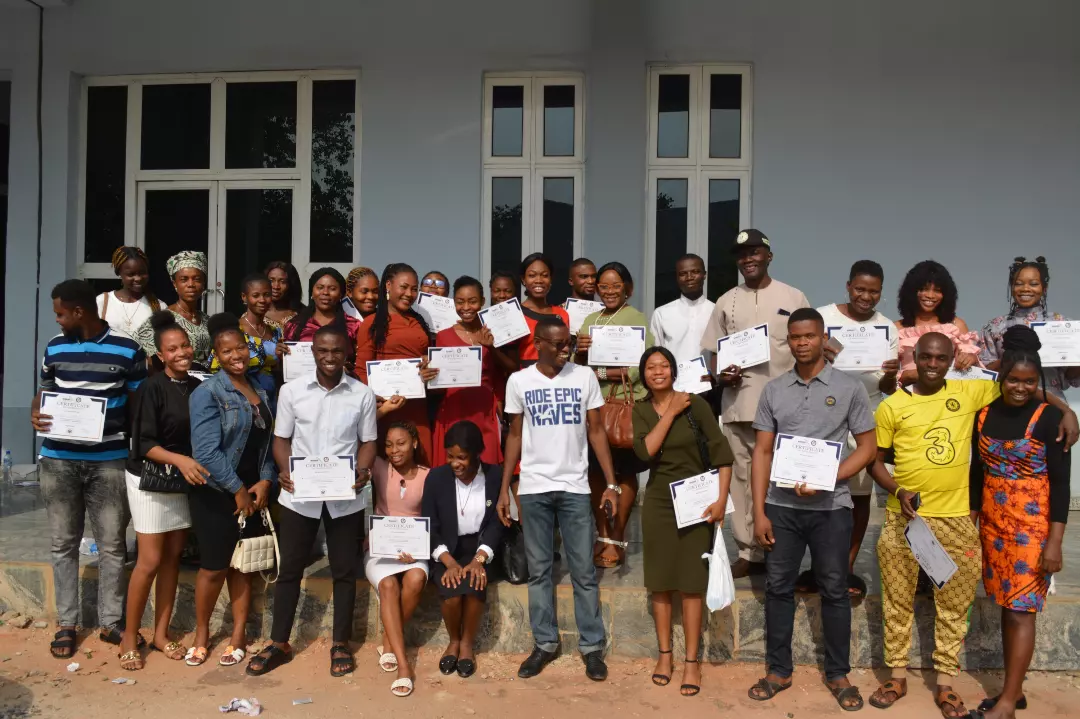
On Saturday, January 22, 2022, the West Africa Broadcast and Media Academy (WABMA) mounted a one-day free short course on Fact-Checking and Detecting Misinformation. The training held at the Multipurpose Hall of Maria Assumpta Catholic Church, Owerri, Imo State.
The short course which WABMA organized in collaboration with the United States Consulate General, Lagos was an eye-opener to the more than 50 journalists, bloggers and social media influencers that participated in it.
The Executive Director, WABMA, Jika Attoh who drilled the participants throughout the more than two hours the course lasted opened their eyes on why they should no longer swallow line, hook and sinker all they read online.
Besides differentiating between facts and opinions, he provided the participants with tools on how to gauge the authenticity of materials they read online.
According to Attoh, facts are things that are known to exist, could be verified, proven and measured. He said a fact is a statement that could be verified or proven or extrapolated while opinion is an expression of judgment or belief about something. Fact, he continued, relies on observation or research while opinion is based on assumption.
The issue of whether the existence of God is a fact nearly caused chaos in the hall but Attoh warned against the fierce debate that built up leading to the suspension of the debate in order to keep the eyes of the participants on the ball. Attoh’s polite way of getting the attention of participants helped in reducing distraction during the training.
Attoh reeled out steps to fact-checking. According to him, the first step is to read beyond the headlines. Thereafter, check the news outlet that published the material, the author, date of publication, links and sources used.
Attoh also advised that while trying to spot fake news, one must check one’s biases, ask oneself whether the material is a joke and seek out experts in the field involved.
He also reeled out websites that people should take materials published in them with a pinch of salt. According to him, the websites do not begin with https:// in their addresses.
The participants confessed being greatly enriched by the knowledge imparted in them during the short course. According to Salvator Amadi, a journalist, the training was timely considering the nearness of general polls in the country which could be marred by fake news. Amadi believes fake news is capable of instigating military intervention in the polity.
Another journalist, Collins Chibueze Ughalaa also described the training as timely. According to Ughalaa, the spread of falsehood is capable of torpedoing the country’s democracy.
He said; “In the face of myriad of unconfirmed, unsubstantiated reports in the media, the training on fact-checking couldn’t have come at a better time. To help our democracy and deepen good governance, the sanity of media space is important.
“We cannot build strong democracy or provide good governance on faulty foundations of falsehood. The short course on fact-checking therefore helps to weed out unhealthy information in the media and leave the healthy ones for our consumption. This helps in deepening democracy and good governance”.
Also speaking, Saviola Godwyn, a broadcaster said the course enriched his knowledge in fact-checking which he is putting into effective use.
Godwyn said the course also exposed him to the opportunities available in the media and how to take advantage of the opportunities.
WABMA is mounting the training in all states of Southern Nigeria. All in all, the course was truly enriching and would help the participants to improve on their craft. This way, the spread of fake news will ebb for the good of the society.
Source: Niger Delta Connect




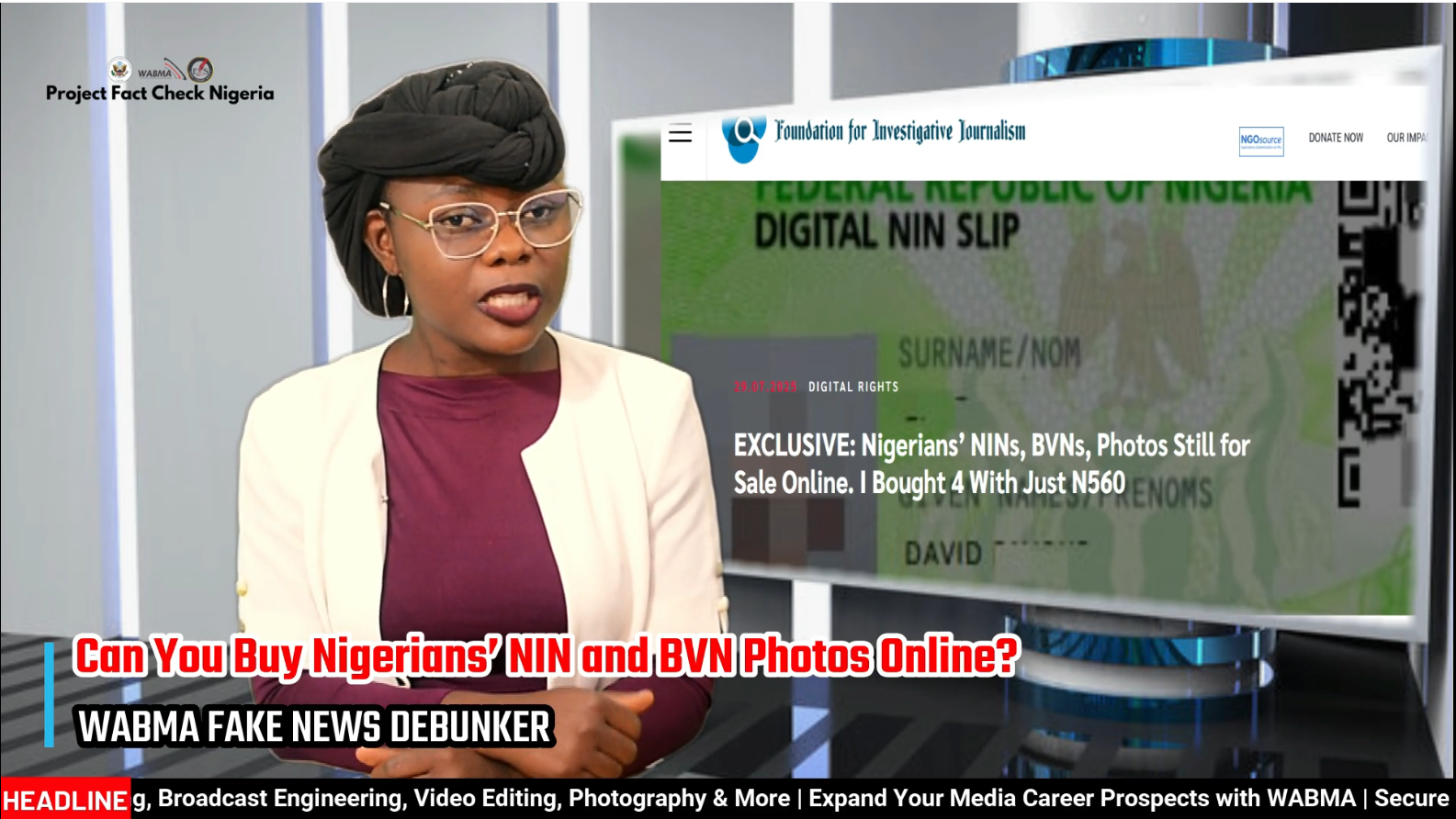
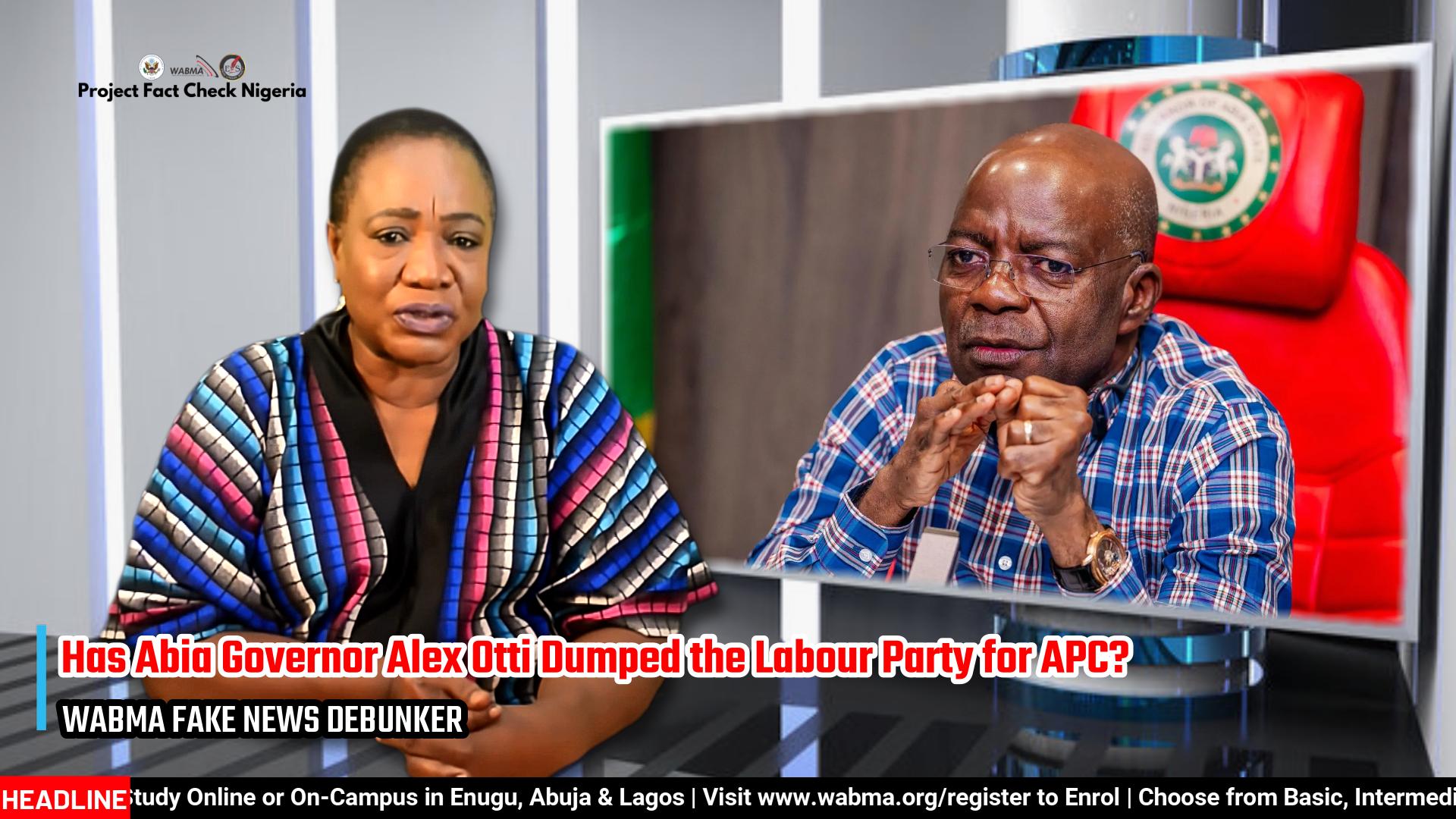
 https://youtu.be/Q-iFBMEU6AA
 Watch, Like & Subscribe! WABMA, in collaboration with media professionals, continues the fight against fake news and misinformation across social and traditional media. Visit our website for more verified insights: projectfactchecknigeria.org


