
Breaking News
Did CBN announce plan to redenominate the naira?


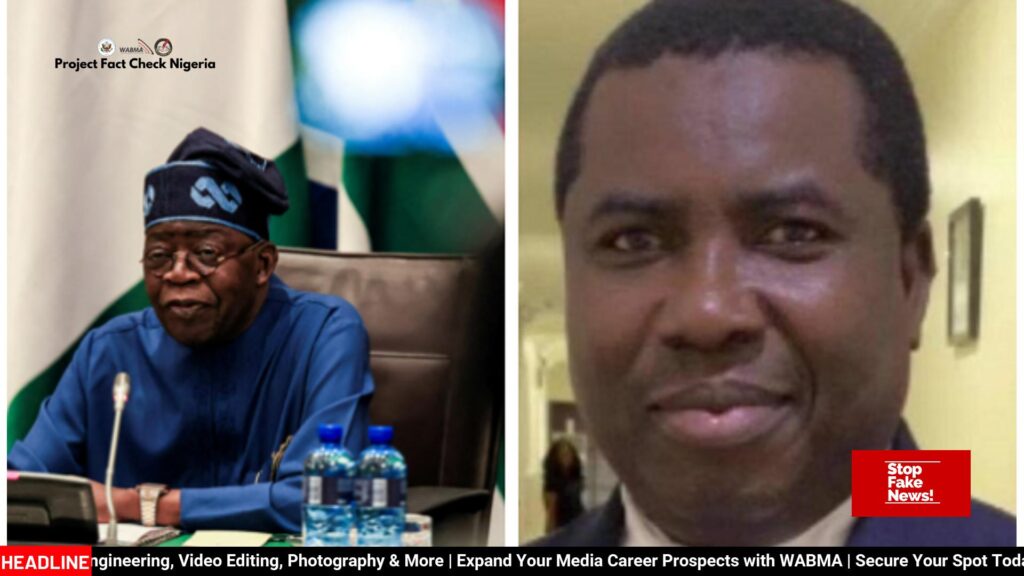
When President Tinubu nominated Professor Joash Amupitan as chairman of the Independent National Electoral Commission, social media erupted. “He was Tinubu’s lawyer during the 2023 election case!” users claimed, warning that democracy was in danger. But is the outrage based on fact?
Verification:
WABMA reviewed the Certified True Copies of both the Presidential Election Tribunal and Supreme Court judgments from the 2023 election petitions.
Amupitan’s name does not appear among the lawyers listed for Tinubu, Shettima, or the APC. Instead, the records show Professor Taiwo Osipitan (SAN) — a University of Lagos law professor — as one of the legal counsels.
The similarity between the surnames Osipitan and Amupitan seems to have caused the mix-up. No court record, statement, or credible media report links Amupitan to Tinubu’s legal team.


It came fast. It came loud. And it came dressed as breaking news.

“Military coup in Cameroon! Paul Biya removed from power after 41 years!”
The video, shared on TikTok by a user named Jimmoexpress37, opened with dramatic music and flashing red text:
“BREAKING: JUBILATION ACROSS CAMEROON”
“MILITARY TAKES OVER POWER”
“PAUL BIYA NO WHERE TO BE FOUND”

It claimed the coup happened around 5 a.m. The narrator spoke with urgency, describing a bloodless takeover triggered by public frustration over Biya’s long rule.
Soon after, the same video was clipped, shortened to 5 minutes, and pushed across WhatsApp groups in Nigeria, Ghana, and Francophone Africa. The mood? Celebration. Many believed a new chapter had opened in Cameroon.
But something didn’t add up.
There was no mention of the supposed coup on BBC, Al Jazeera, or Reuters—not even on Cameroon’s national broadcaster. For a coup in one of Central Africa’s most tightly controlled countries, this silence was deafening.
So fact checkers started digging.
The earliest version of the video traced back to June 8, 2025, posted by a little-known YouTube channel called Jeunesse Panafricaine, with just 2,700 subscribers. The video seemed real—until you listened carefully.
The narrator’s voice didn’t quite match the visuals. Experts pointed out it carried signs of AI manipulation—that slightly off rhythm, that synthetic clarity that’s too perfect for amateur recording.

Then came the smoking gun: President Paul Biya’s verified Facebook account was still active. Just hours after the video’s circulation, Biya posted a message urging unity:
“Let us not oppose our differences but confront our ideas… Let’s consider our ethnic or cultural differences as enriching factors.”
He was clearly alive, well, and still president!
More checks showed there was no troop movement in Yaoundé, no military declaration, no international diplomatic response—nothing you would expect if a 41-year ruler had been overthrown.
And history supports that. The last coup attempt in Cameroon was in 1984—and it failed. Biya, now in his 90s, has survived more than four decades of political storms. But there has been no successful or confirmed coup attempt since then.
So, what was the video?
Likely, it was AI-enhanced disinformation, the kind used to test reactions, spark unrest, or push particular narratives. With AI, it’s now easier than ever to create the illusion of news without ever stepping into a newsroom.

And that’s the real danger.
False stories about coups can destabilize countries, trigger panic, or even justify preemptive crackdowns. In fragile political climates, lies about power changes can be as damaging as the real thing.
Conclusion: Paul Biya was not overthrown. There was no military coup.
What there was—was a very real attempt to manipulate perception.
Across Africa and beyond, videos, reels, and tweets are shaping opinions, not always with truth.
From fake bans to fictional buildings, from manufactured coups to fabricated scandals—misinformation thrives when facts are not checked.
At WABMA Debunker, we don’t take posts at face value. We follow the facts. And we don’t just question what’s said—we question who benefits when it’s believed.
#fakenews #fakenews #debunkit #debunkit #fakenews
💥Was INEC Chair Nominee Joash Amupitan Part of Tinubu’s Legal Team?

Can You Really Buy Nigerians’ NIN & BVN Photos Online? The Truth!


