
News
💥Sujimoto’s Claims Against Enugu Govt: What’s the Truth?


“A contractor for Enugu State’s Smart Schools Project has taken to social media, claiming victimization. The contractor in question—identified as Sijibomi Ogundele, also known as Sujimoto—
… says the project was awarded below cost…
That the Governor promised him another contract…
And that rising costs forced him to abandon the work. And finally, that he’s heading to the EFCC to clear his name. But what do the facts actually show?”
Evidence & Counterfacts
Narration:
“On July 2, 2024, was awarded ₦11.4 billion to build about 20 Smart Green Schools.
The government says they advanced him half of that sum—₦5.7 billion—upfront to speed up delivery.
Yet, a year later, joint inspections by the Ministry of Works and the security agencies found most sites abandoned, some barely above foundation level.
Reports show progress of only 5 to 30 percent across the sites, despite hundreds of millions released for each one.
No materials on site. No workers. Poor workmanship. And the contractor is said to have ignored invitations to explain himself.
Instead of lawful requests for contract review, he walked away.”
Context & Accountability
Narration:
“Government records show something more troubling.
According to the Government, though Sujimoto presented a bond from Jaiz Bank, he diverted all payments into a different account—making accountability difficult.
This shows premeditated intent to defraud, not hardship, the Government counter claims.
That’s why the State petitioned the EFCC.

Debunker fact checking team confirms that, meanwhile, other Smart School contractors working under the same economic conditions have continued to deliver while negotiating for review and variations. Many of the smart schools’ campuses, such as the three in GTC Enugu, and the ones in:
- Queens, New Layout
- Ndeabor, Aninri LGA
- Owo Nkanu
- Ugwuomu Nike
- Obe, Nkanu West
- Umuome, Inyi, Oji River
- Ubahu-Amankanu, Nkanu East
- Umachi, Igboeze North
- Amechi Idodo, Nkanu East
- Essodo, Igboeze North
- Alor-Uno, Nsukka
- Nkerefi, Nkanu East
- Ajiona Ovoko, Igboeze South
- Ihe Obukpa, Nsukka
- Iheakpu Awka, Igboeze South
- Ihe Onuiyi, Nsukka
- Ibeagwa Ezema, Igboeze South
- Ibeagwa Nike, Enugu East
- Iheaka, Igboeze South
- Ugwogo Nike, Enugu East
- Ovoko Ulo, Igboeze South
are at various stages of completion.
Conclusion:
Narration:
“Sujimoto had a clear contract. He received advance payment of billions of Naira. Instead of going into arbitration when he had difficulties, he abandoned the sites. Therefore, the verdict is clear: Sujimoto’s claims are misleading.
Since the government is determined to launch many of the Smart Schools are by September 2025, it is taking determined actions to deliver.

Breaking News
Did Cardi B Confirm Dating Nigerian Goalkeeper Maduka Okoye? The $300,000 Monthly Rumour Debunked
News
Did Cardi B Confirm Dating Nigerian Goalkeeper Maduka Okoye? The $300,000 Monthly Rumour Debunked
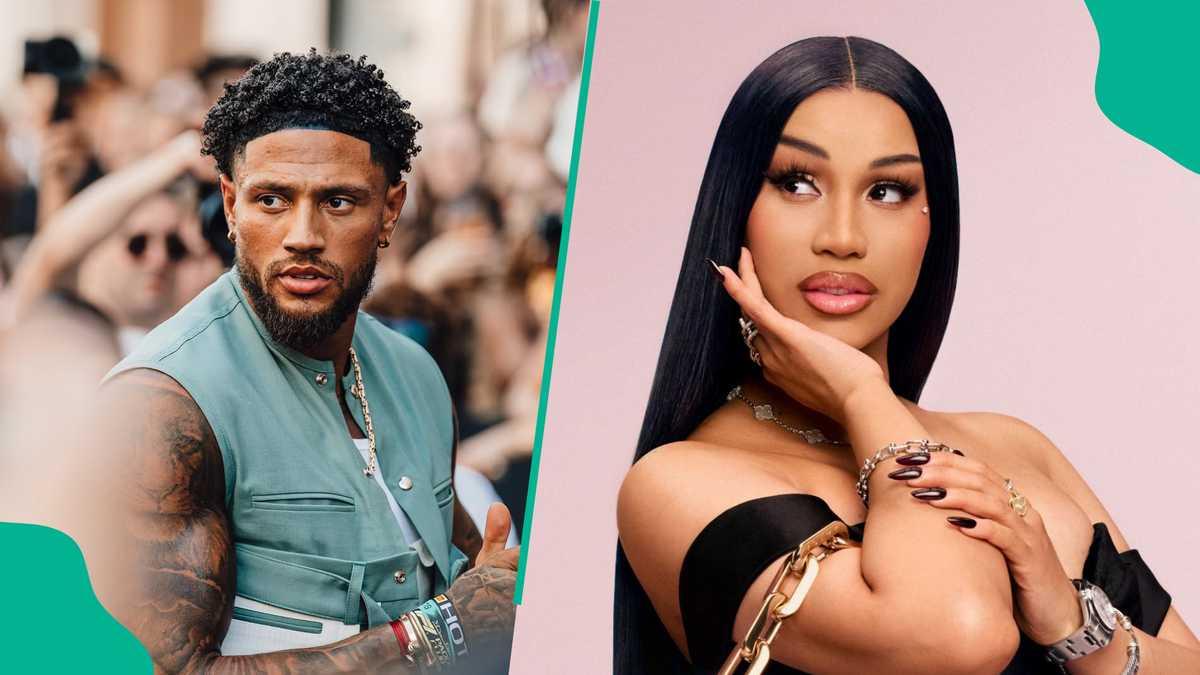
Did Cardi B Confirm Dating Nigerian Goalkeeper Maduka Okoye? The $300,000 Monthly Rumour Debunked
VERDICT: FALSE
Social media has been buzzing with claims that American rapper Cardi B has confirmed she is dating Nigerian Super Eagles goalkeeper Maduka Okoye.
Some viral posts go further, alleging that Okoye pays Cardi B $300,000 every month to be his girlfriend.
The posts also attribute statements to Cardi B suggesting she would not mind having a baby with the goalkeeper because he is “a good man” and “a great keeper too.”
The claims have attracted considerable attention online, but an investigation by WABMA Debunker found no credible evidence that Cardi B made these statements or publicly confirmed the alleged relationship.
What Is the Claim?
Viral social media posts suggest that Cardi B and Maduka Okoye are romantically involved, with some claiming that the Nigerian international pays the rapper $300,000 monthly.
Other posts attribute quotations to Cardi B expressing admiration for Okoye and a willingness to have a child with him.
However, the posts do not provide credible original sources to substantiate the alleged statements.
What We Found
WABMA Debunker searched for interviews, videos, verified social media posts and credible entertainment reports containing the statements attributed to Cardi B.
We found no credible evidence that she made the alleged statements.
What is established is that Cardi B and Maduka Okoye have been seen together publicly.
In July 2026, the pair were spotted sitting together at Paris Fashion Week. They were later seen together again at a dinner in Venice, Italy. These appearances triggered widespread speculation about the nature of their relationship.
However, being seen together does not amount to confirmation of a romantic relationship.
Following their Venice appearance, TMZ reported that there was still no confirmation that Cardi B and Okoye were anything more than friends. Other entertainment reports also described the relationship as speculation rather than a confirmed romance.
What About Cardi B’s Response to the Rumours?
The speculation intensified following allegations made about Okoye by his former partner, Jelicia Westhoff, on social media.
Cardi B subsequently addressed the stream of stories surrounding her dating life.
In audio reported by TMZ, she complained about the rumours and false stories that emerge whenever she is seen with someone.
However, Cardi B did not confirm in that audio that Maduka Okoye was her boyfriend.
Neither did she say that he pays her $300,000 every month.
WABMA Debunker also found no credible interview, video or verified social media post in which Cardi B said she wanted to have a baby with Okoye because he was “a good man” or “a great keeper.”
The supposed quotations appear in viral social media posts, but we could not trace them to a credible original source.
Verdict: FALSE
The claim that Cardi B confirmed she is dating Maduka Okoye and said he pays her $300,000 every month is FALSE.
Although the rapper and Nigerian goalkeeper have been seen together on several occasions, those appearances have fuelled speculation rather than established a confirmed romantic relationship.
As of our verification, neither the reported confirmation nor the sensational quotations attributed to Cardi B have been substantiated.
Whether the two have a private romantic relationship is a separate matter. The available evidence does not establish that either Cardi B or Maduka Okoye has publicly confirmed one.
Photographs can fuel speculation, but speculation is not confirmation, and a viral quotation is not evidence that someone actually said it.
Always Fact-Check Before You Share
WABMA Debunker is a fact-checking initiative of the West Africa Broadcast & Media Academy, dedicated to investigating viral claims, misinformation and misleading content circulating online.
Our goal is to promote responsible information sharing and strengthen media literacy.
Don’t engage. Don’t amplify. Verify before you share.
Visit www.wabma.org for more fact-checks and media literacy content.
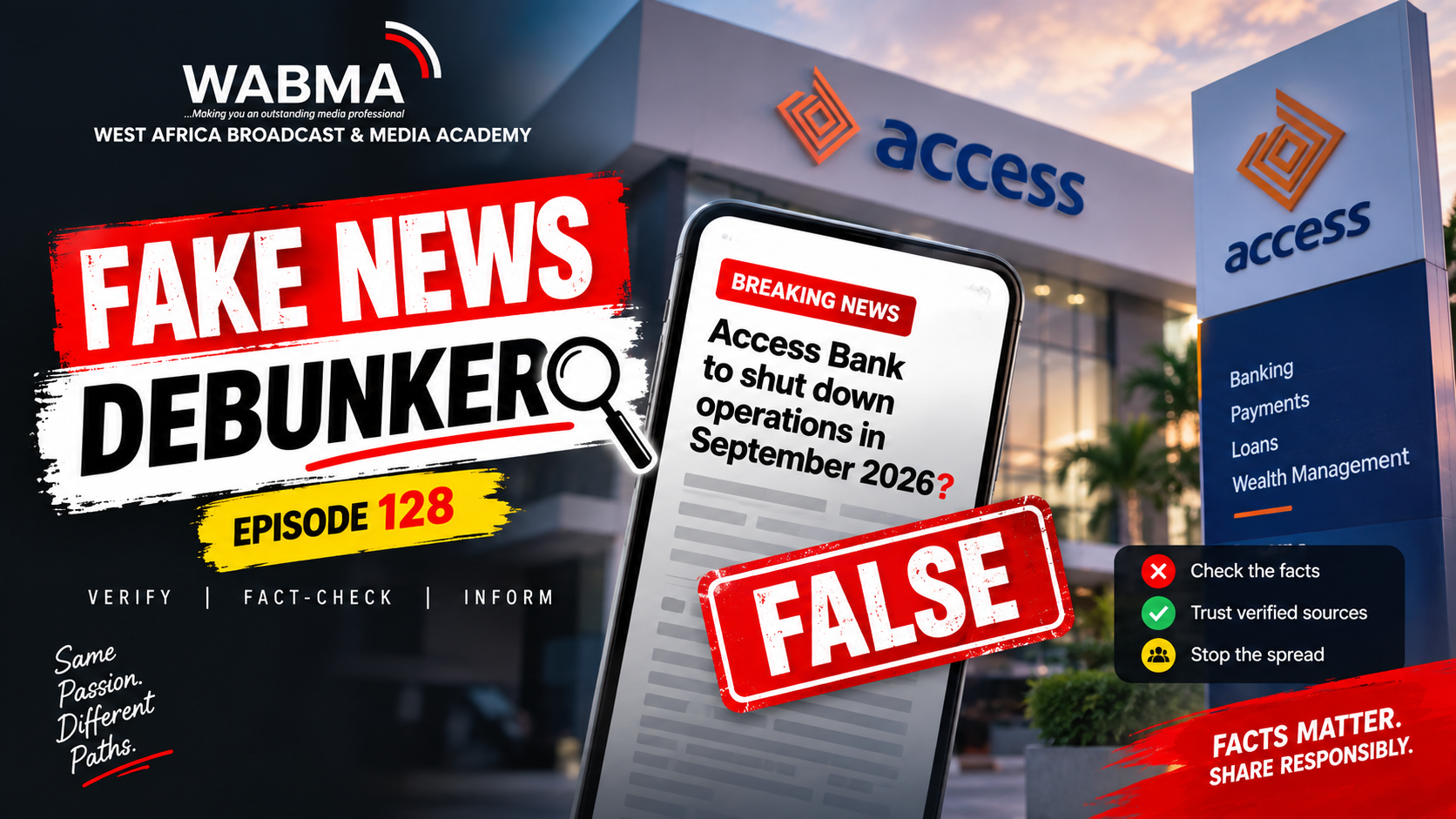
A message circulating on social media claims that Access Bank will shut down its banking operations in September 2026.
But is the claim true?
In Episode 128 of the WABMA Fake News Debunker, we examine the circulating message and verify the claim using statements from Access Bank, Access Holdings, and credible reports.
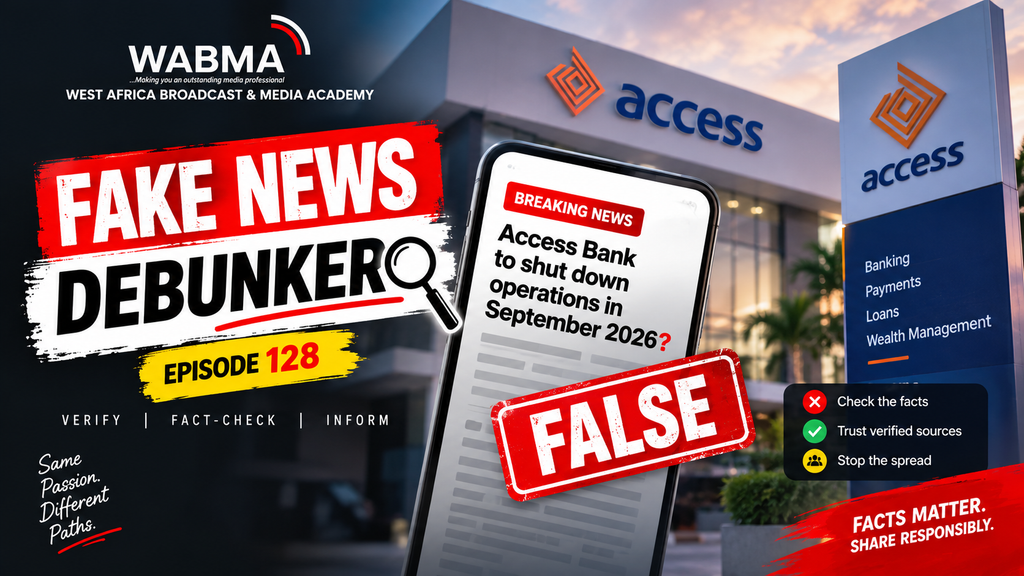
🔎 Verdict: FALSE
Access Bank has denied the circulating shutdown notice, describing it as false and misleading and stating that it impersonated the bank’s official communication channels.
Access Holdings also confirmed that the publication was false and unauthorised, stating that there had been no change to Access Bank’s operations or financial condition.
This episode highlights why it is important to verify financial information before sharing it or taking action based on it.
Watch Episode 128
🎥 Watch the full episode on YouTube:
WABMA Fake News Debunker – Episode 128
Have a claim you want us to fact-check?
📲 Send it to WABMA via WhatsApp: 0902 547 8072
📱 Social media: @wabmaonline | @wabmaacademy
Verify. Fact-check. Inform.
🌐 Visit: projectfactchecknigeria.org
#WABMA #FakeNewsDebunker #FactCheckNigeria #AccessBank #Misinformation #Nigeria
Did Cardi B Confirm Dating Nigerian Goalkeeper Maduka Okoye? The $300,000 Monthly Rumour Debunked

Did Cardi B Confirm Dating Nigerian Goalkeeper Maduka Okoye? The $300,000 Monthly Rumour Debunked


