Connect with us

News

Did Cardi B Confirm Dating Nigerian Goalkeeper Maduka Okoye? The $300,000 Monthly Rumour Debunked

Published

on

Did Cardi B Confirm Dating Nigerian Goalkeeper Maduka Okoye? The $300,000 Monthly Rumour Debunked
VERDICT: FALSE

Social media has been buzzing with claims that American rapper Cardi B has confirmed she is dating Nigerian Super Eagles goalkeeper Maduka Okoye.

Some viral posts go further, alleging that Okoye pays Cardi B $300,000 every month to be his girlfriend.

The posts also attribute statements to Cardi B suggesting she would not mind having a baby with the goalkeeper because he is “a good man” and “a great keeper too.”

The claims have attracted considerable attention online, but an investigation by WABMA Debunker found no credible evidence that Cardi B made these statements or publicly confirmed the alleged relationship.

What Is the Claim?

Viral social media posts suggest that Cardi B and Maduka Okoye are romantically involved, with some claiming that the Nigerian international pays the rapper $300,000 monthly.

Other posts attribute quotations to Cardi B expressing admiration for Okoye and a willingness to have a child with him.

However, the posts do not provide credible original sources to substantiate the alleged statements.

What We Found

WABMA Debunker searched for interviews, videos, verified social media posts and credible entertainment reports containing the statements attributed to Cardi B.

We found no credible evidence that she made the alleged statements.

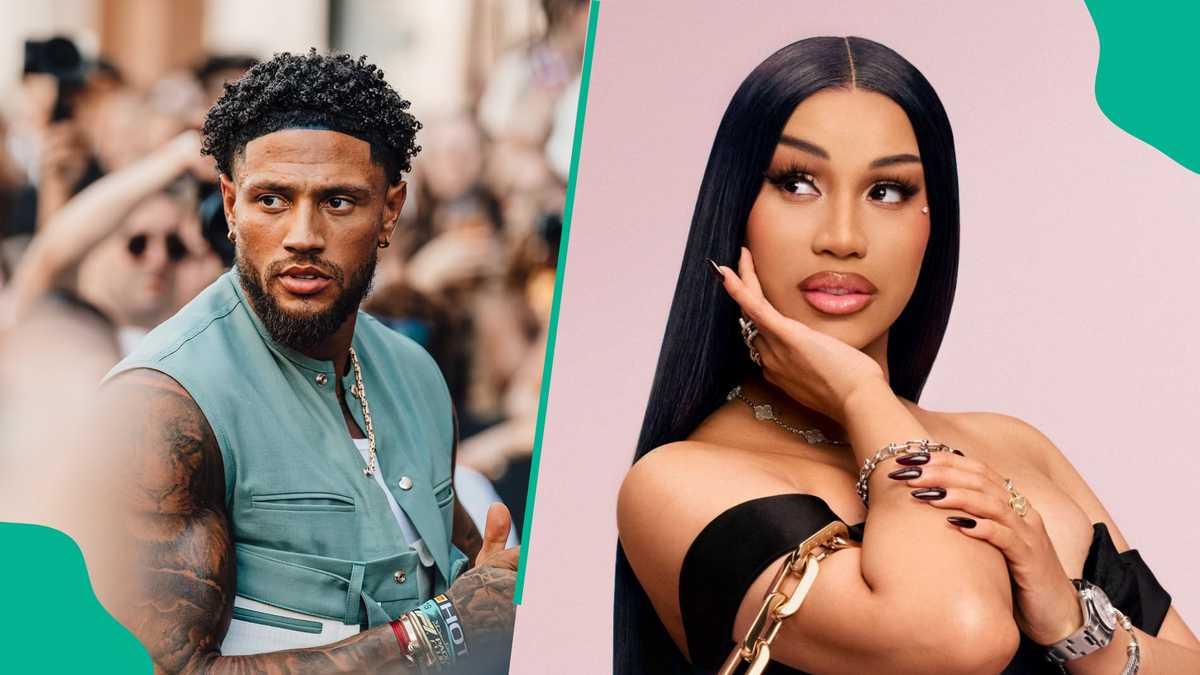
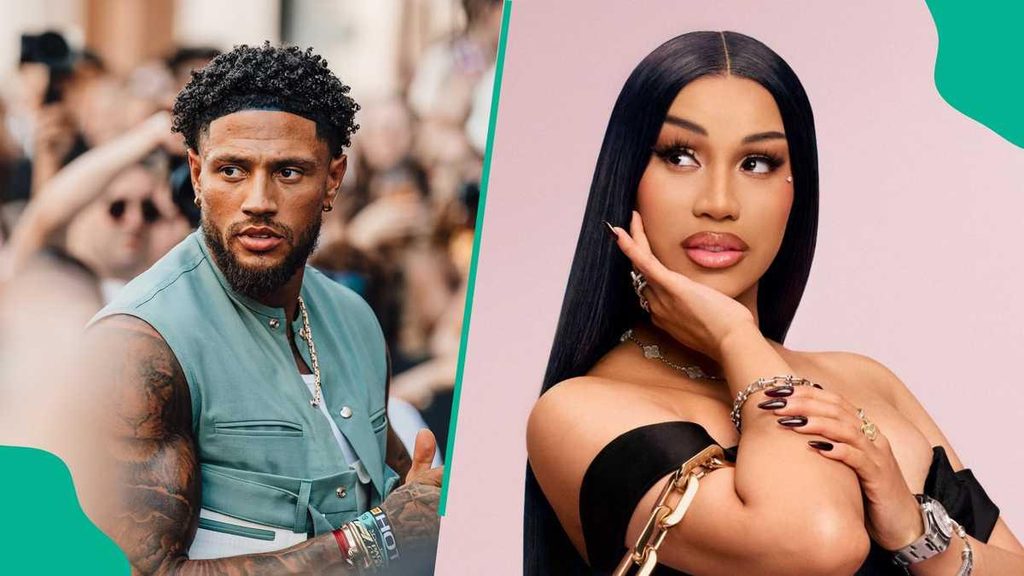
What is established is that Cardi B and Maduka Okoye have been seen together publicly.

In July 2026, the pair were spotted sitting together at Paris Fashion Week. They were later seen together again at a dinner in Venice, Italy. These appearances triggered widespread speculation about the nature of their relationship.

However, being seen together does not amount to confirmation of a romantic relationship.

Following their Venice appearance, TMZ reported that there was still no confirmation that Cardi B and Okoye were anything more than friends. Other entertainment reports also described the relationship as speculation rather than a confirmed romance.

What About Cardi B’s Response to the Rumours?

The speculation intensified following allegations made about Okoye by his former partner, Jelicia Westhoff, on social media.

Cardi B subsequently addressed the stream of stories surrounding her dating life.

In audio reported by TMZ, she complained about the rumours and false stories that emerge whenever she is seen with someone.

However, Cardi B did not confirm in that audio that Maduka Okoye was her boyfriend.

Neither did she say that he pays her $300,000 every month.

WABMA Debunker also found no credible interview, video or verified social media post in which Cardi B said she wanted to have a baby with Okoye because he was “a good man” or “a great keeper.”

The supposed quotations appear in viral social media posts, but we could not trace them to a credible original source.

Verdict: FALSE

The claim that Cardi B confirmed she is dating Maduka Okoye and said he pays her $300,000 every month is FALSE.

Although the rapper and Nigerian goalkeeper have been seen together on several occasions, those appearances have fuelled speculation rather than established a confirmed romantic relationship.

As of our verification, neither the reported confirmation nor the sensational quotations attributed to Cardi B have been substantiated.

Whether the two have a private romantic relationship is a separate matter. The available evidence does not establish that either Cardi B or Maduka Okoye has publicly confirmed one.

Photographs can fuel speculation, but speculation is not confirmation, and a viral quotation is not evidence that someone actually said it.


Always Fact-Check Before You Share

WABMA Debunker is a fact-checking initiative of the West Africa Broadcast & Media Academy, dedicated to investigating viral claims, misinformation and misleading content circulating online.

Our goal is to promote responsible information sharing and strengthen media literacy.

Don’t engage. Don’t amplify. Verify before you share.

Visit www.wabma.org for more fact-checks and media literacy content.
Continue Reading
Click to comment

Leave a Reply

Your email address will not be published. Required fields are marked *

News

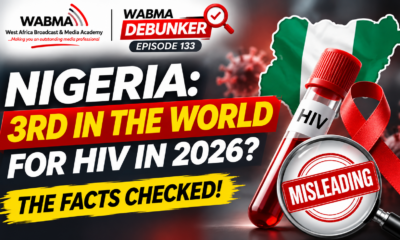
💥 Is Nigeria 3rd in the World for HIV in 2026? | MISLEADING

Published

on

💥 Is Nigeria 3rd in the World for HIV in 2026? | MISLEADING

🎥 Watch the full episode: 👇
https://youtu.be/TEgypvthfPc.co

Watch, like & subscribe!🙏🏽

WABMA, in collaboration with media professionals, continues the fight against fake news and misinformation across social and traditional media.

🔎 Verify before you share.
🌐 FMI: projectfactchecknigeria.org

#WABMA #FakeNewsDebunker #WABMADebunker #HIVFactCheck #StopMisinformation

Continue Reading

News

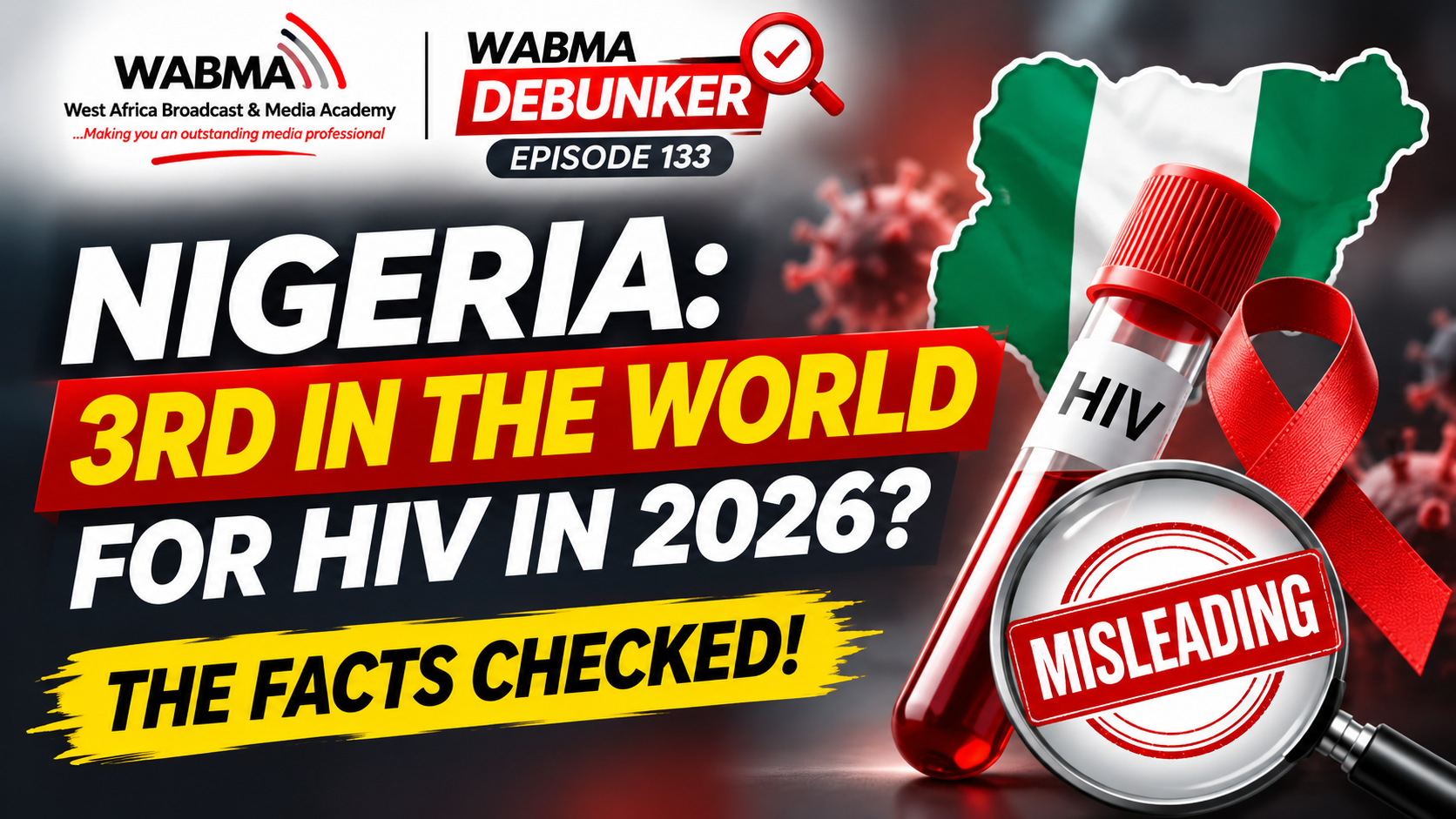
Is Nigeria the World’s Third Highest Country for HIV Cases in 2026?

Published

on

A graphic circulating on social media claims that Nigeria ranks third in the world for HIV, with about 1.7 to 1.9 million people living with HIV in 2026.

The graphic provides no source for the ranking.

Nigeria does have one of the world’s largest populations of people living with HIV.

But is Nigeria really number three in the world in 2026?

VERIFICATION

WABMA Debunker investigated.

First, there is an important distinction.

HIV burden can be measured in different ways.

One is HIV prevalence, meaning the proportion of a population living with HIV.

Another is the total number of people living with HIV.

These are not the same thing, and countries can rank very differently depending on which measure is being used.

We checked the latest data from UNAIDS, the United Nations programme responsible for coordinating the global response to HIV and AIDS.

And we found a problem with the viral claim.

The description of Nigeria as third in the world is largely based on an older ranking.

Nigeria was previously described as having the world’s third largest HIV burden, behind South Africa and India.

But that historical description should not automatically be presented as Nigeria’s current global position.

For example, South Africa alone had an estimated 7.8 million people living with HIV in 2024, according to UNAIDS. (UNAIDS)

Current UNAIDS datasets also show substantial HIV populations in countries including Mozambique, meaning a current global ranking needs to be calculated from comparable country data rather than copied from older reports. (AIDS Data Repository)

There is another problem with the viral graphic.

It describes 1.7 to 1.9 million people as Nigeria’s 2026 HIV figure.

That wording can be misleading.

UNAIDS released updated HIV estimates in July 2026, but those figures describe the HIV situation in 2025.

UNAIDS says that globally about 41 million people were living with HIV in 2025. (UNAIDS)

The UNAIDS data repository also identifies Nigeria’s “HIV Estimates 2026” dataset as containing estimates for the year 2025. (AIDS Data Repository)

So, a dataset released in 2026 should not automatically be described as the number of Nigerians who had HIV “in 2026.”

There is another language issue.

People living with HIV should not simply be described as “people infected in 2026.”

That wording can wrongly suggest that all of them acquired HIV during that year.

The correct expression is “people living with HIV.”

So, is the entire viral graphic false?

No.

The underlying point that Nigeria has a substantial HIV burden is true.

Nigeria has roughly two million people living with HIV according to recent estimates and remains one of the countries carrying a significant share of the global HIV burden.

But combining that fact with an outdated or unsupported global ranking makes the graphic misleading.

VERDICT: MISLEADING

The claim that Nigeria is currently the world’s third highest country for HIV cases in 2026 is MISLEADING.

Nigeria does have one of the world’s largest populations of people living with HIV.

But the “third in the world” description comes from older rankings and should not be presented as a confirmed 2026 global ranking without current comparable data.

The claim also confuses the year in which UNAIDS released its latest estimates with the year those estimates describe.

UNAIDS’ 2026 data release reports HIV estimates for 2025, not a final count of HIV cases occurring in 2026. (UNAIDS)

WHY THIS MATTERS

Health statistics require context.

A number may be genuine but still become misinformation when someone attaches the wrong year, ranking or description to it.

And when reporting HIV, we should distinguish between people living with HIV, new HIV infections and HIV prevalence.

They measure different things.

So when you see a health ranking online, do not just ask whether the number looks believable.

Ask where it came from, what exactly it measures and which year it represents.

Do you have a story? Tag us on all our socials @wabmaonline, or on Instagram @wabmaacademy. You can also share via WhatsApp on 0902 547 8072, and we will fact-check for you.

Before you share any claim — especially about politics — take a moment to verify. Visit WABMA Debunker weekly for verified stories that separate fact from fiction.

Join WABMA in debunking fake stories. Share this with your contacts.

Continue Reading

News

Did Nigeria launch FreeTV nationwide?

Published

on

A message circulating on WhatsApp claims that the Federal Government of Nigeria has launched FreeTV nationwide, giving Nigerians access to more than 100 television channels without paying monthly subscription fees.

Some social media users have questioned the claim, asking whether FreeTV is real or simply another viral internet message.

So, did Nigeria actually launch FreeTV nationwide?

VERIFICATION

WABMA Debunker checked the claim.

Our findings show that the claim is TRUE.

On June 17, 2026, the Federal Government launched FreeTV, a national digital television platform under Nigeria’s Digital Switch Over programme. Independent reports from Premium Times, The Guardian and other Nigerian media confirm the launch.

FreeTV is part of Nigeria’s long running transition from analogue television broadcasting to digital broadcasting.

According to the official FreeTV platform, viewers can access more than 100 national, regional and state television channels without paying monthly subscription fees.

The available programming includes news, sports, movies and Nollywood, entertainment, children’s programmes, educational content and regional language channels.

FreeTV says its satellite service provides coverage across all 36 states. The service can also be accessed through terrestrial broadcasting and the FreeTV mobile application.

But there is an important clarification.

FreeTV does not mean that everything required to watch it is provided free of charge.

There are no monthly subscription charges, but television viewers may need compatible reception equipment.

The official FreeTV website lists a free to air DVB S2 decoder, a satellite dish and an LNB among the equipment required for satellite reception. Compatible DVB T2 or DVB S2 decoders may also be used.

In other words, you may have to spend money to get connected, but once properly connected, you do not pay a monthly television subscription.

VERDICT: TRUE

The Federal Government of Nigeria launched FreeTV on June 17, 2026, as part of the country’s Digital Switch Over programme.

The platform offers more than 100 channels without monthly subscription charges and has nationwide satellite coverage.

So, if you received the message saying Nigeria has launched FreeTV nationwide, the central claim is true.

But remember: no monthly subscription does not necessarily mean no cost of equipment or installation.

Continue Reading

Trending