
News
The Vinegar Miracle: Can a Homemade Mix Unblock Your Heart?


They say it’s the miracle mix your doctor won’t tell you about…

Apple cider vinegar.
Lemon juice. Ginger. Garlic.
Blend it all, take a few spoonfuls daily, and—just like that—your heart’s blood vessels will “naturally open,” making surgeries like angioplasty and bypass completely unnecessary.
Or so the viral posts claim. Shared thousands of times in Southern, Eastern, and Western Africa and beyond, the promise is simple, seductive—and dangerous.
But does it hold up under the weight of medical science?
Let’s investigate.
First, what exactly is this life-saving surgery people are being told they no longer need?
Angioplasty is a medical procedure where doctors use a small balloon-tipped catheter to open blocked heart arteries. It restores blood flow and can prevent a fatal heart attack. The American Heart Association says it’s often used when blockages cause serious chest pain or pose a life-threatening risk.

Bypass surgery goes even further. Surgeons take blood vessels from other parts of the body to reroute blood around dangerously narrowed or blocked arteries. It’s a major operation—three to six hours long—but often life-saving.
Now, could a simple kitchen remedy really replace all that?
The Facebook posts are loud and confident. They insist that a blend of apple cider vinegar, lemon, ginger, and garlic can “open the veins of the heart.” But here’s the truth, according to Africa Check who interviewed several medical experts:
Professor Akanmu Sulaimon, a respected haematologist at the University of Lagos, calls it what it is: “Bogus.”
Dr. Anisuiba Benedict, a cardiologist at the University of Nigeria Teaching Hospital, agrees: “Such a combination does not open veins in the heart.”
In short: There’s no scientific evidence that this mixture can dissolve plaque or unclog arteries. The idea isn’t just incorrect—it’s dangerously misleading.
So, what really protects your heart?
Not a homemade potion, but long-term habits backed by science:
✔️ Eat more fruits and vegetables
✔️ Exercise regularly
✔️ Monitor your blood pressure
✔️ Avoid tobacco
✔️ Limit alcohol
✔️ Manage stress
The British Heart Foundation and cardiologists worldwide agree: these are the things that make a real difference.
Conclusion
The claim that a mix of vinegar, lemon, ginger, and garlic can “open the veins of the heart” and replace medical procedures is completely false.
These posts are not harmless. They can delay proper treatment, put lives at risk, and feed the myth that serious medical conditions can be cured with kitchen cabinet concoctions.
Breaking News
Did Cardi B Confirm Dating Nigerian Goalkeeper Maduka Okoye? The $300,000 Monthly Rumour Debunked
News
Did Cardi B Confirm Dating Nigerian Goalkeeper Maduka Okoye? The $300,000 Monthly Rumour Debunked

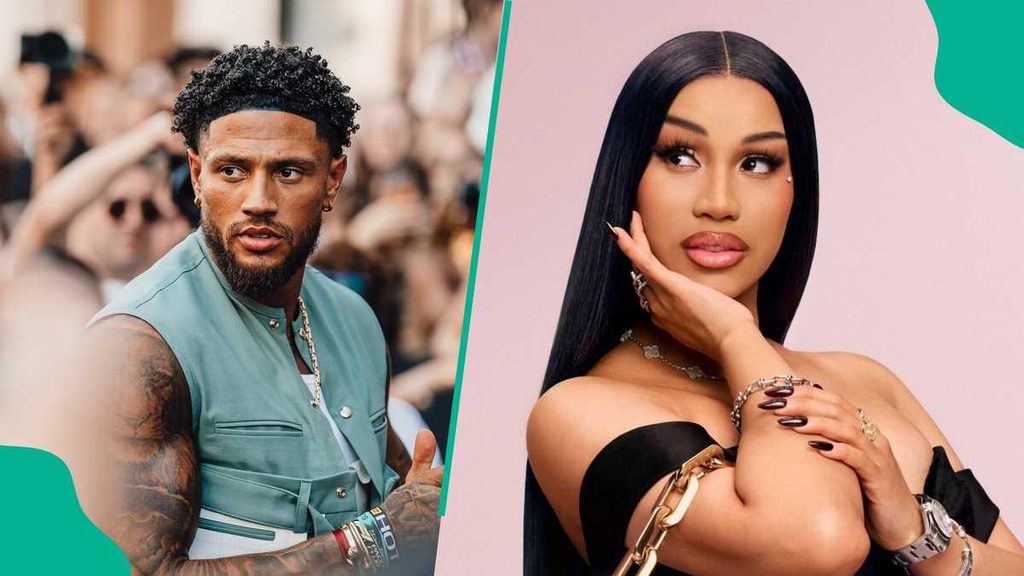
Did Cardi B Confirm Dating Nigerian Goalkeeper Maduka Okoye? The $300,000 Monthly Rumour Debunked
VERDICT: FALSE
Social media has been buzzing with claims that American rapper Cardi B has confirmed she is dating Nigerian Super Eagles goalkeeper Maduka Okoye.
Some viral posts go further, alleging that Okoye pays Cardi B $300,000 every month to be his girlfriend.
The posts also attribute statements to Cardi B suggesting she would not mind having a baby with the goalkeeper because he is “a good man” and “a great keeper too.”
The claims have attracted considerable attention online, but an investigation by WABMA Debunker found no credible evidence that Cardi B made these statements or publicly confirmed the alleged relationship.
What Is the Claim?
Viral social media posts suggest that Cardi B and Maduka Okoye are romantically involved, with some claiming that the Nigerian international pays the rapper $300,000 monthly.
Other posts attribute quotations to Cardi B expressing admiration for Okoye and a willingness to have a child with him.
However, the posts do not provide credible original sources to substantiate the alleged statements.
What We Found
WABMA Debunker searched for interviews, videos, verified social media posts and credible entertainment reports containing the statements attributed to Cardi B.
We found no credible evidence that she made the alleged statements.
What is established is that Cardi B and Maduka Okoye have been seen together publicly.
In July 2026, the pair were spotted sitting together at Paris Fashion Week. They were later seen together again at a dinner in Venice, Italy. These appearances triggered widespread speculation about the nature of their relationship.
However, being seen together does not amount to confirmation of a romantic relationship.
Following their Venice appearance, TMZ reported that there was still no confirmation that Cardi B and Okoye were anything more than friends. Other entertainment reports also described the relationship as speculation rather than a confirmed romance.
What About Cardi B’s Response to the Rumours?
The speculation intensified following allegations made about Okoye by his former partner, Jelicia Westhoff, on social media.
Cardi B subsequently addressed the stream of stories surrounding her dating life.
In audio reported by TMZ, she complained about the rumours and false stories that emerge whenever she is seen with someone.
However, Cardi B did not confirm in that audio that Maduka Okoye was her boyfriend.
Neither did she say that he pays her $300,000 every month.
WABMA Debunker also found no credible interview, video or verified social media post in which Cardi B said she wanted to have a baby with Okoye because he was “a good man” or “a great keeper.”
The supposed quotations appear in viral social media posts, but we could not trace them to a credible original source.
Verdict: FALSE
The claim that Cardi B confirmed she is dating Maduka Okoye and said he pays her $300,000 every month is FALSE.
Although the rapper and Nigerian goalkeeper have been seen together on several occasions, those appearances have fuelled speculation rather than established a confirmed romantic relationship.
As of our verification, neither the reported confirmation nor the sensational quotations attributed to Cardi B have been substantiated.
Whether the two have a private romantic relationship is a separate matter. The available evidence does not establish that either Cardi B or Maduka Okoye has publicly confirmed one.
Photographs can fuel speculation, but speculation is not confirmation, and a viral quotation is not evidence that someone actually said it.
Always Fact-Check Before You Share
WABMA Debunker is a fact-checking initiative of the West Africa Broadcast & Media Academy, dedicated to investigating viral claims, misinformation and misleading content circulating online.
Our goal is to promote responsible information sharing and strengthen media literacy.
Don’t engage. Don’t amplify. Verify before you share.
Visit www.wabma.org for more fact-checks and media literacy content.

A message circulating on social media claims that Access Bank will shut down its banking operations in September 2026.
But is the claim true?
In Episode 128 of the WABMA Fake News Debunker, we examine the circulating message and verify the claim using statements from Access Bank, Access Holdings, and credible reports.

🔎 Verdict: FALSE
Access Bank has denied the circulating shutdown notice, describing it as false and misleading and stating that it impersonated the bank’s official communication channels.
Access Holdings also confirmed that the publication was false and unauthorised, stating that there had been no change to Access Bank’s operations or financial condition.
This episode highlights why it is important to verify financial information before sharing it or taking action based on it.
Watch Episode 128
🎥 Watch the full episode on YouTube:
WABMA Fake News Debunker – Episode 128
Have a claim you want us to fact-check?
📲 Send it to WABMA via WhatsApp: 0902 547 8072
📱 Social media: @wabmaonline | @wabmaacademy
Verify. Fact-check. Inform.
🌐 Visit: projectfactchecknigeria.org
#WABMA #FakeNewsDebunker #FactCheckNigeria #AccessBank #Misinformation #Nigeria
Did Cardi B Confirm Dating Nigerian Goalkeeper Maduka Okoye? The $300,000 Monthly Rumour Debunked

Did Cardi B Confirm Dating Nigerian Goalkeeper Maduka Okoye? The $300,000 Monthly Rumour Debunked


