
African News
Will domestic workers earn new minimum wage?

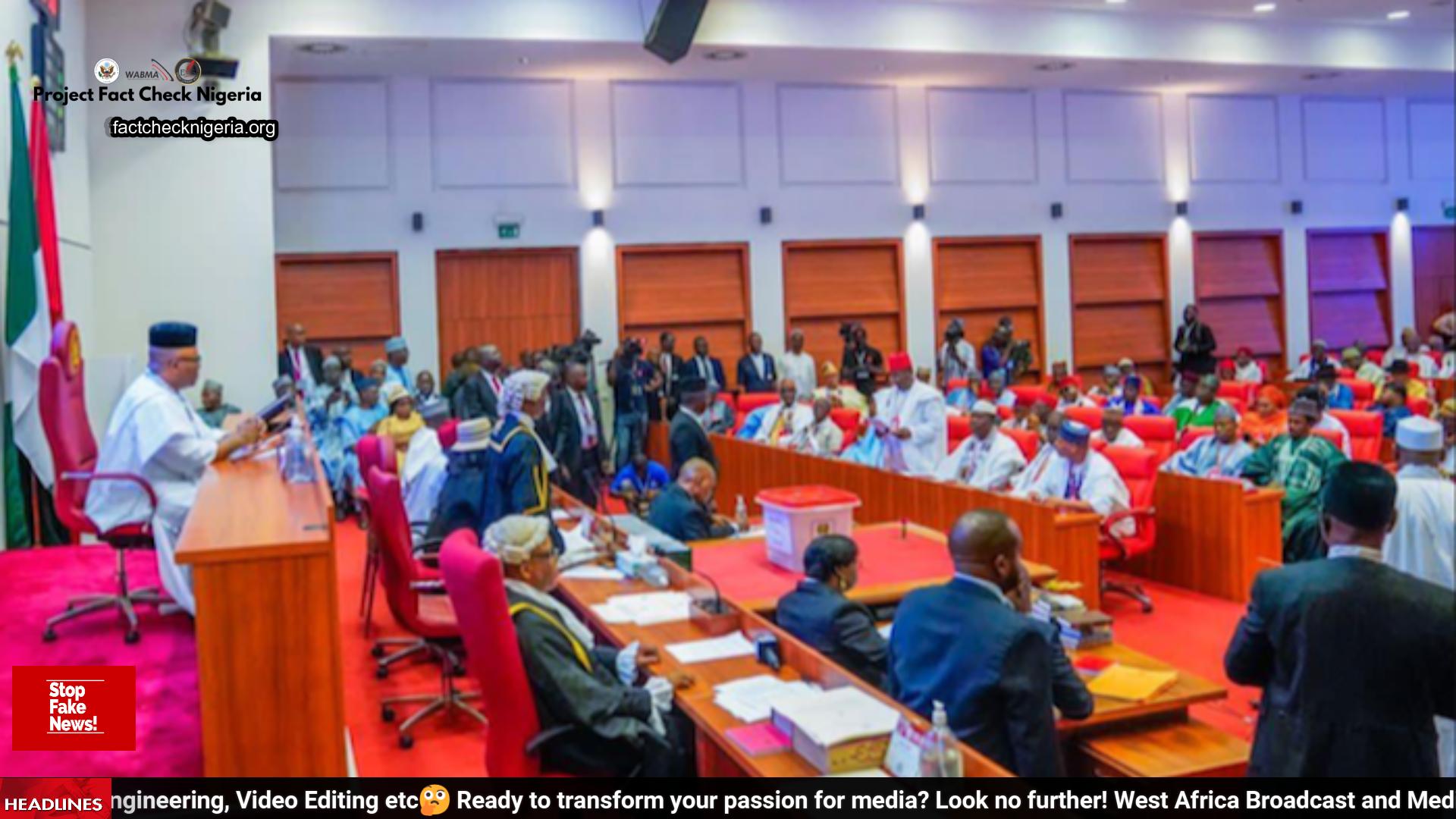
Recently, Senate President Godswill Akpabio made an announcement that has sparked widespread discussions. According to him, the newly approved minimum wage would apply to all workers, across both public and private sectors, including domestic staff like maids and gatemen.
The question on everyone’s mind: Could this be true? Are domestic workers about to receive a significant pay rise?
During a plenary session, Akpabio boldly declared: “If you are a tailor and you employ additional hands, you cannot pay them below 70,000 Naira. If you are a mother with a newborn child and you want to hire a housemaid to look after your child, you cannot pay the person below the approved minimum wage. It applies to all and sundry.”
His statement was met with enthusiasm, and various credible platforms quickly picked up the story. The prospect of a new financial benchmark for domestic workers seemed promising.
But here’s where we pause — how accurate is this claim?
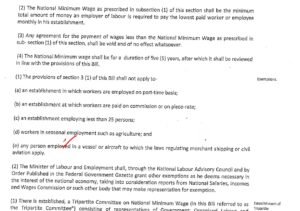
After delving into the details of the 2024 National Minimum Wage Amendment Act Bill and the National Minimum Wage Act of 2019, we found that domestic workers are NOT included in the payment of the monthly minimum wage for employees in the country. Both the 2024 National Minimum Wage Amendment Act Bill and the National Minimum Wage Act of 2019 did not include domestic workers in the payment of the monthly minimum wage for employees in the country.
Section 3(1) of the 2019 Act states that “Every employer shall pay a national minimum wage of not less than N30,000 per month to every worker under his establishment, except as otherwise provided under this Act,” while Section 4(1) of the Act states that, “Section 3(1) does not apply to establishments in which workers are employed or paid on a part-time basis and commission or piece rate, an establishment employing less than 25 persons, workers in seasonal employment like agriculture, and any person employed in a vessel or aircraft to which the laws regulating merchant shipping or civil aviation apply.”
The explanatory memorandum of the 2024 minimum wage amendment bill remained silent on the inclusion of domestic workers, leaving their fate unchanged from the 2019 provisions.
CONCLUSION
The claim by Senate President Akpabio that domestic workers will earn N70, 000 minimum wage is FALSE.



African News
Did U.S. Troops Arrive in Nigeria in February 2026? Here’s the Truth Behind the Viral Video
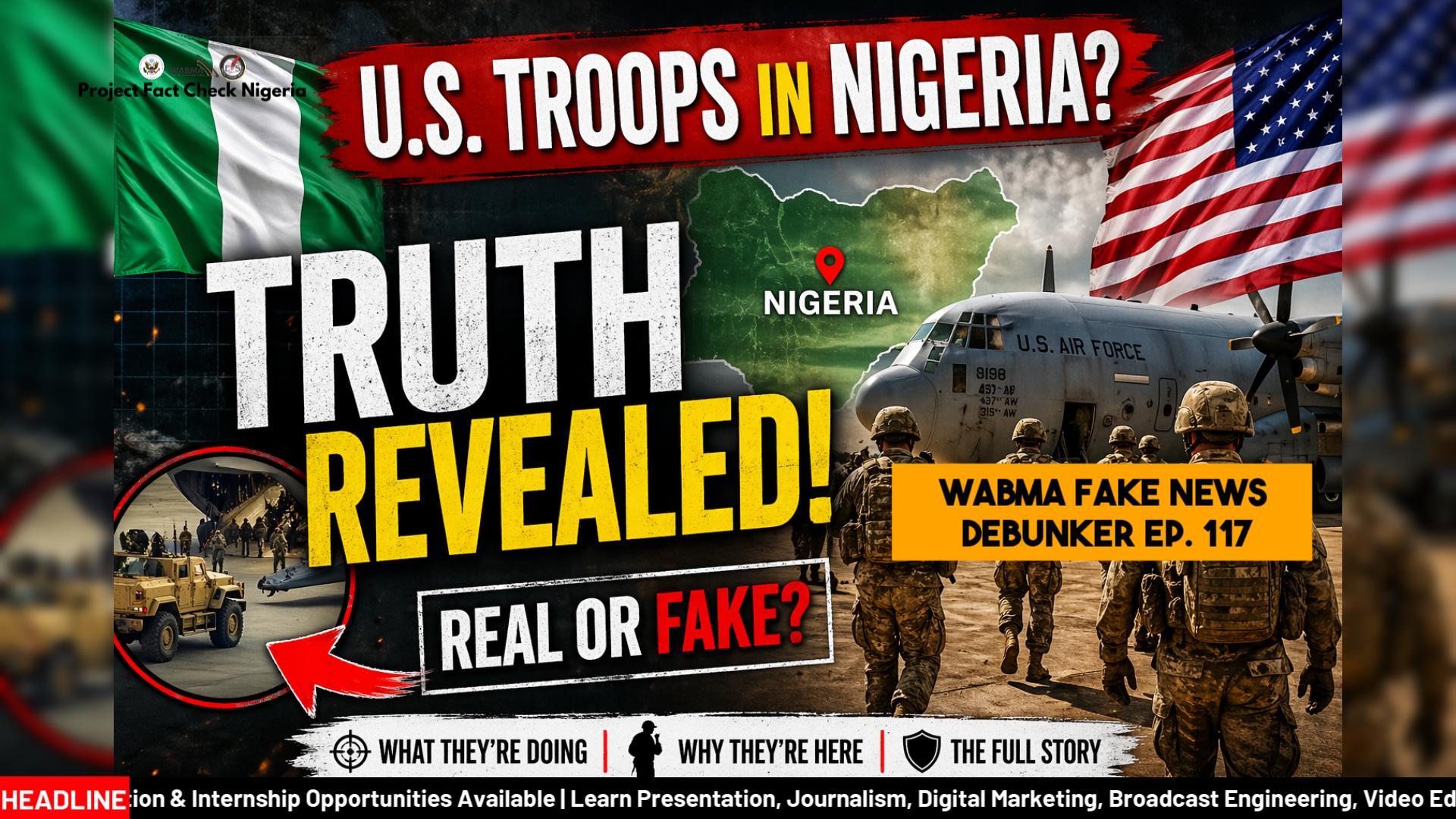
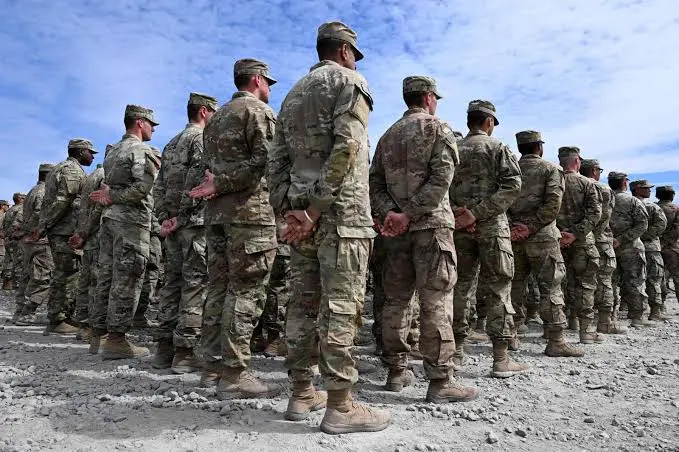
A viral video circulating across social media has sparked widespread concern, claiming that United States military forces arrived in Nigeria on February 15, 2026, suggesting a possible foreign intervention.
Given the sensitivity of national security and public anxiety surrounding such claims, we conducted a detailed verification to separate fact from speculation.
🔍 WHAT WE INVESTIGATED
To verify the claim, we examined:
- The viral video and its context
- Reports from reputable international media
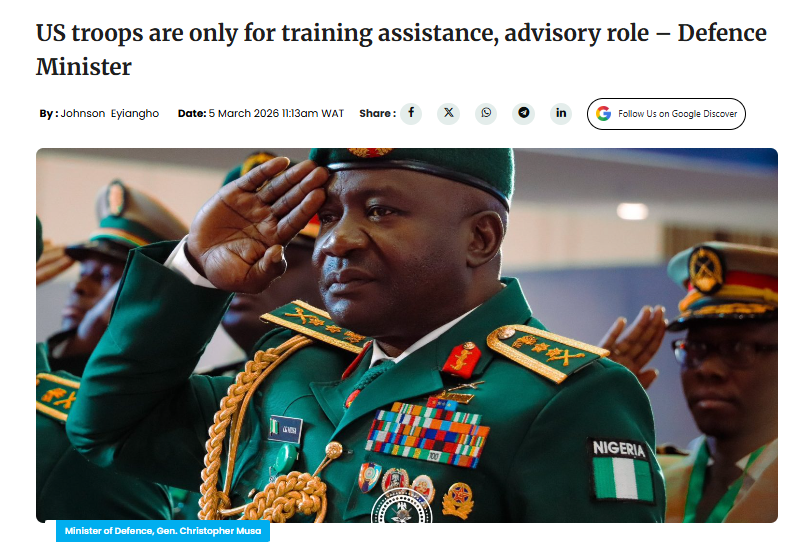
- Official statements from Nigerian defence authorities
- Information from U.S. government and military sources
✅ WHAT THE EVIDENCE SHOWS
✔️ U.S. Military Personnel Did Arrive in Nigeria
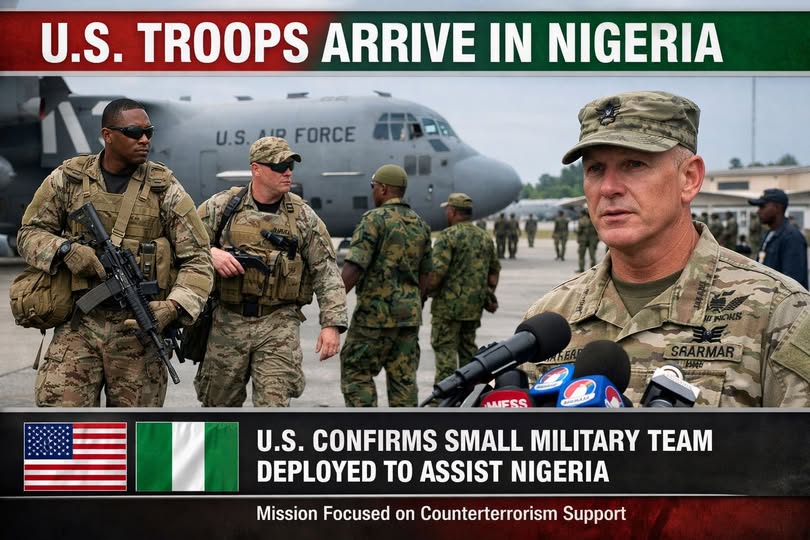
Credible reports confirm that approximately 100 U.S. troops arrived in Nigeria around mid-February 2026.
This deployment is part of an ongoing security cooperation mission between Nigeria and the United States.
🎯 Purpose of the Mission
The presence of U.S. personnel is focused on supporting Nigeria’s fight against insurgent groups, including:
- Boko Haram
- Islamic State West Africa Province (ISWAP)
Their activities include:
- Training Nigerian military personnel
- Sharing intelligence
- Providing technical and operational support
- Strengthening counter-terrorism capacity
❌ WHAT IS MISLEADING OR FALSE
🚫 No Evidence of Independent Combat Operations
Despite claims online, there is no verified evidence that U.S. troops are conducting independent combat missions in Nigeria.
🚫 No Threat to Nigeria’s Sovereignty
Nigerian authorities have clarified that the deployment:
- Is part of an existing bilateral agreement
- Does not override Nigeria’s control over its military operations
- Falls within standard international security cooperation
🧠 CONTEXT YOU SHOULD KNOW
Nigeria has faced ongoing security challenges in parts of the North, with insurgent groups carrying out attacks on civilians and security forces.
As a result, international partnerships—including with the United States—have long played a role in:
- Military training
- Intelligence collaboration
- Logistical support
This latest deployment aligns with those ongoing efforts.
📊 SUMMARY
| Claim | Verdict |
|---|---|
| U.S. troops arrived in Nigeria | ✅ True |
| Troops are conducting combat operations | ❌ Not supported |
| Nigeria’s sovereignty is compromised | ❌ False |
🏁 FINAL VERDICT
Mostly True — But Misleading Without Context
While U.S. military personnel did arrive in Nigeria in February 2026, their role is strictly advisory and support-based, not a full-scale combat deployment as suggested by viral claims.
⚠️ WHY THIS MATTERS
Misinformation around military activity can quickly escalate fear and confusion.
Understanding the difference between:
- Military cooperation
- and military intervention
…is critical for informed public discourse.
🔔 STAY INFORMED
Follow our Fake News Debunker Series for verified, fact-checked updates on trending stories.
African News
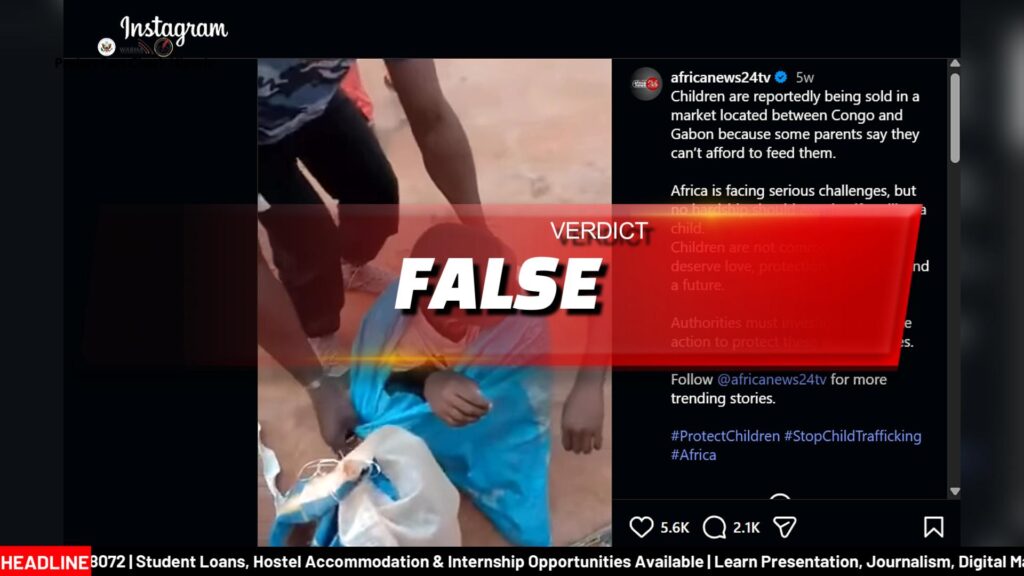
✴️ Ep.116– Does Viral Video Show a Market Between Congo and Gabon Where Parents Sell Their Children?

A viral video claims to show a “child market” between Congo and Gabon where parents allegedly sell their children. But is this true?

In this episode of WABMA Fake News Debunker (Ep. 116), we carefully examine the footage, verify available evidence, and separate fact from fiction.
🔍 What we investigated:
- The viral video and its visual details
- Reports from credible international media
- Data from global child-protection organizations
- Any evidence of a “child market” in the Congo–Gabon region
❌ Our Verdict: FALSE
There is no verified evidence that such a market exists. The viral video does not prove child trafficking and has been shared without proper context.
⚠️ Why this matters:
Misinformation like this spreads fear, reinforces harmful stereotypes, and distracts from real child protection issues.
🎓 Learn Media & Fact-Checking Skills with WABMA
Become a skilled media professional in just 5 weeks.
📞 +2349025478072
📞 +2349076985638
📞 +2348187269995
🌐 wabma.org
CLAIM: Did China Announce the Closure of Its Diplomatic Missions in Abuja and Lagos?