
Nigeria
Are Nigerians barred from performing 2025 hajj?


What if you were told that Nigeria’s Muslim faithful will be shut out of the 2025 Hajj pilgrimage? No trip to Makkah. No rites at the Kaaba. Just a total ban.

That’s the shocking claim making waves online. But… is it true?
THE CLAIM
Several posts on Facebook, including one from popular page Gossip Mill NG TV, say it plainly:
“No More Hajj for Nigerian Muslims!!! Saudi Arabia Suspends Visas For Nigeria, 13 Other Countries Ahead Of 2025 Hajj.”
At first glance, it’s disturbing. The posts allege that Saudi Arabia has barred Nigerians from entering the kingdom for the sacred pilgrimage. As the 2025 Hajj draws closer — scheduled for early June — the panic is spreading.
- But WABMA Debunker took a closer look.
THE FACTS
Yes, Saudi Arabia did temporarily suspend the issuance of short-term visas to 14 countries — Nigeria included — starting 13 April. But there’s a catch.

The suspension does not apply to Hajj visas. That’s right. Business, tourist, and family visit visas were paused — not the religious pilgrimage.
In fact, the Saudi tourism office clarified that tourist visa holders are not allowed to perform Hajj or be in Makkah during the Hajj period. That’s standard practice, not a new restriction.
Furthermore, the Nigerian Ministry of Foreign Affairs issued a clear denial: the rumors of an entry ban on Nigerians for the 2025 Hajj are false and unfounded.
And the National Hajj Commission of Nigeria — NAHCON — backed this up with a tweet from its official handle: Nigerian pilgrims are not affected. Preparations for the 2025 Hajj are ongoing.

Conclusion, Let’s be clear: Nigerians are NOT banned from the 2025 Hajj. The claim is FALSE.
It’s another case of viral misinformation that plays on religious sensitivity and fuels unnecessary panic. When it comes to information that affects millions — faith, health, elections — always pause, verify, and share responsibly.
Breaking News
Did Cardi B Confirm Dating Nigerian Goalkeeper Maduka Okoye? The $300,000 Monthly Rumour Debunked

We fact-checked the viral claim that Ikeja Electric was named “Worst Company of the Year 2025” and that its executives received “Worst Business People” awards. Read the verdict.

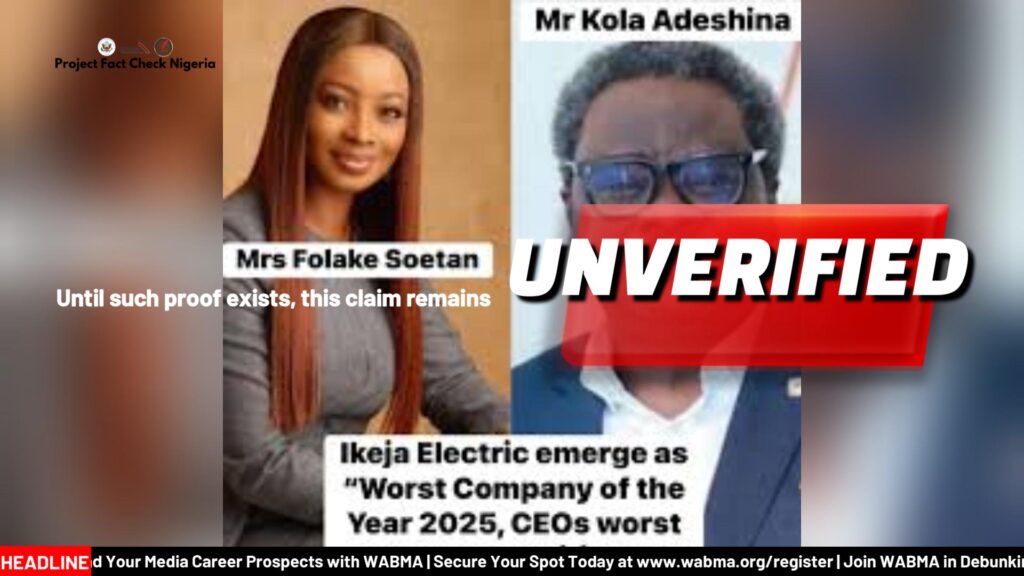
A provocative message has been spreading rapidly across WhatsApp groups and other social media platforms in Nigeria. The claim is direct: Ikeja Electric was recognized as the Worst Company of the Year 2025.
The message goes further, alleging that the company’s Chief Executive Officer, Folake Soetan, and Board Chairman, Kola Adesina, received a specific award titled Worst Business People. The supposed presenter of this award was the Nigerian Global Business Forum.

We asked a simple question: Did this actually happen?
We conducted a thorough investigation to verify this claim:
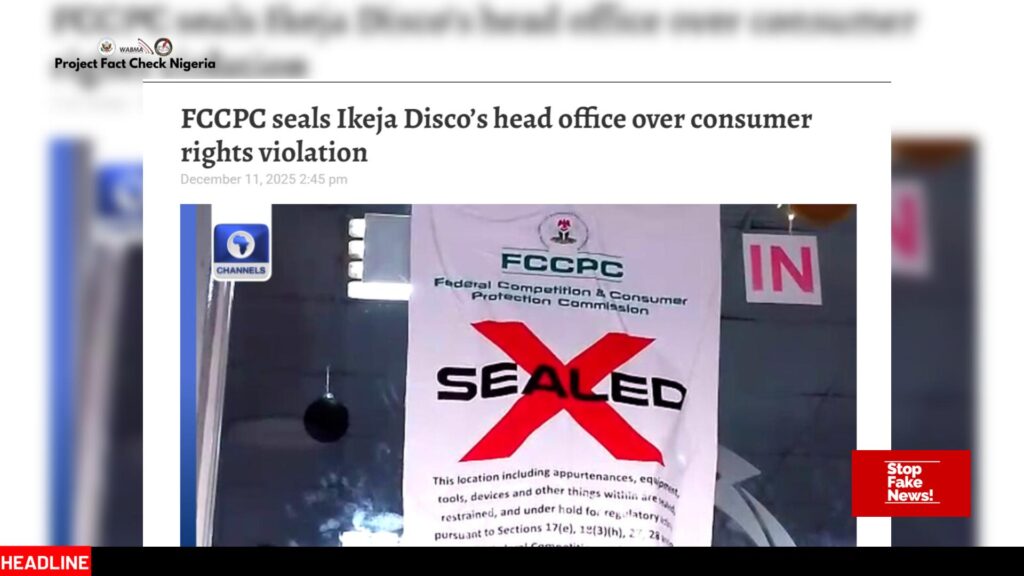
- Searched for Official Announcements: We found no official press statement, event report, or award listing from the Nigerian Global Business Forum regarding a “Worst Company” award.
- Reputable News Platforms: Credible Nigerian and global media outlets that cover the power sector have no record of this award. If a major national distributor had been publicly named “worst company,” it would have been widely reported.
- Examined Context (Regulatory Action): While the Federal Competition and Consumer Protection Commission (FCCPC) did seal Ikeja Electric’s headquarters in December 2025 over compliance issues, regulatory enforcement is not the same as a global “worst company” award.
- Checked Previous Recognitions: In prior years, Ikeja Electric has received industry awards for performance and gender diversity, contradicting the claim of a consistent “worst” performance.
- Direct Company Response: Ikeja Electric has publicly denied the report and announced plans for a forensic investigation and possible legal action against those responsible for spreading the claim.
After examining all available evidence, one fact stands clear: There is no verifiable record that Ikeja Electric, its CEO, or its Chairman received any official “Worst Company of the Year 2025” or “Worst Business People” award.
This story circulating online is a headline without proof.
Our verdict is: Unverified. Until credible proof exists, this claim must be considered unverified misinformation.
When dramatic and provocative claims appear, especially those that damage reputations, it is crucial to pause and check. Look for official sources and independent confirmation. Absence of evidence does not prove innocence, but bold accusations require credible proof.
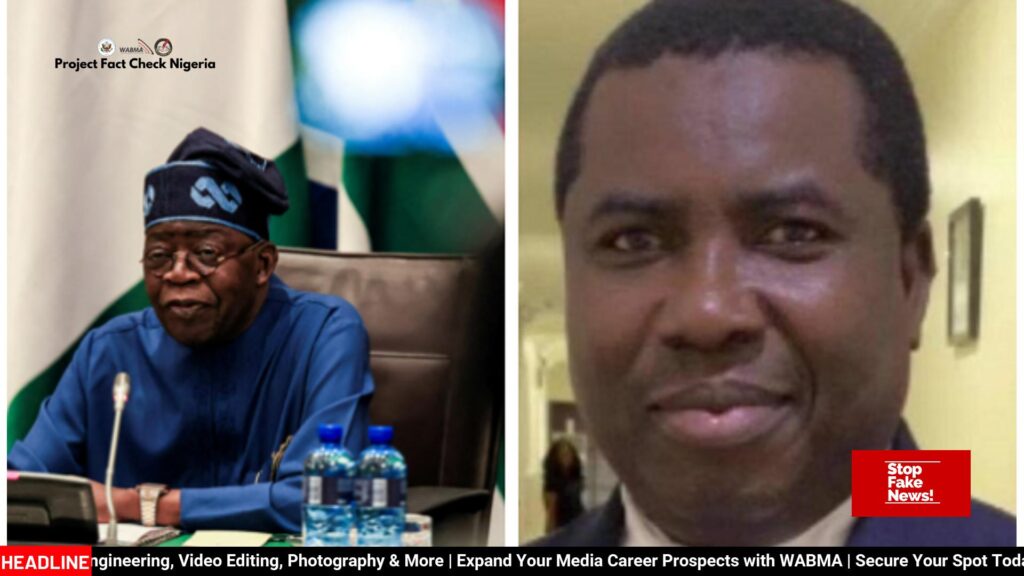
When President Tinubu nominated Professor Joash Amupitan as chairman of the Independent National Electoral Commission, social media erupted. “He was Tinubu’s lawyer during the 2023 election case!” users claimed, warning that democracy was in danger. But is the outrage based on fact?
Verification:
WABMA reviewed the Certified True Copies of both the Presidential Election Tribunal and Supreme Court judgments from the 2023 election petitions.
Amupitan’s name does not appear among the lawyers listed for Tinubu, Shettima, or the APC. Instead, the records show Professor Taiwo Osipitan (SAN) — a University of Lagos law professor — as one of the legal counsels.
The similarity between the surnames Osipitan and Amupitan seems to have caused the mix-up. No court record, statement, or credible media report links Amupitan to Tinubu’s legal team.
Did Cardi B Confirm Dating Nigerian Goalkeeper Maduka Okoye? The $300,000 Monthly Rumour Debunked

Did Cardi B Confirm Dating Nigerian Goalkeeper Maduka Okoye? The $300,000 Monthly Rumour Debunked